
Sometimes, it’s only after we talk about what we write that we truly understand it
You’ve likely heard the writer’s lament that “I don’t know what I think until I write.” But I’m discovering a corollary to that: “I don’t know what I’ve written until I speak.”
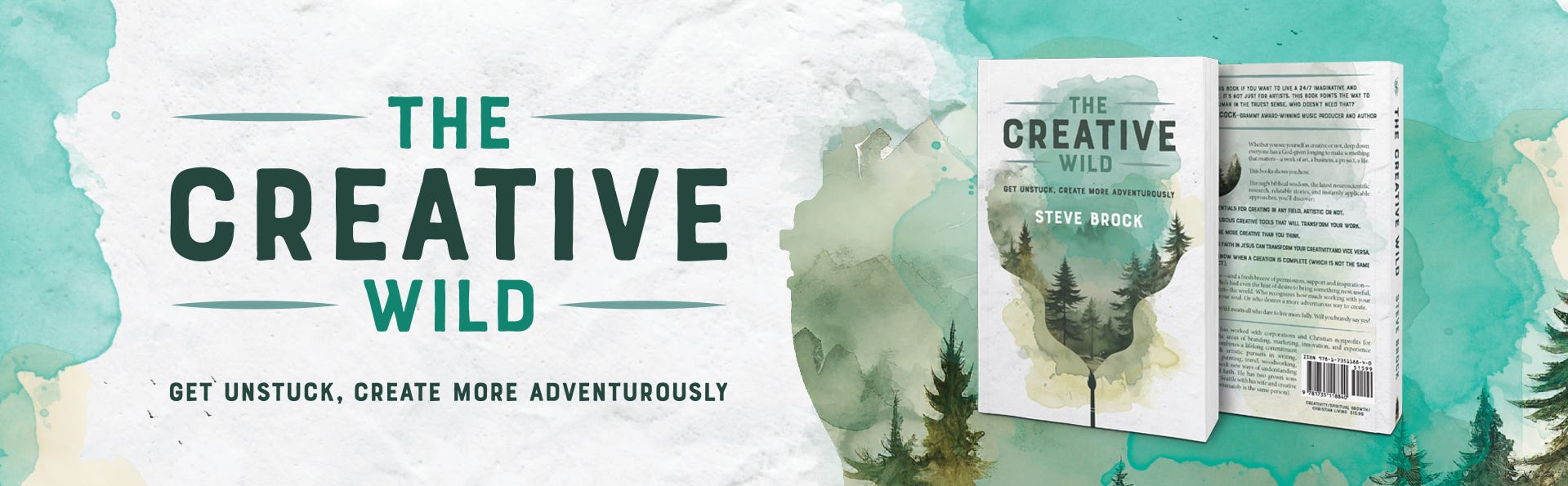
In preparation for the January 25th (next week!) launch of my forthcoming book, The Creative Wild: Get Unstuck, Create More Adventurously, I’ve been speaking with some of the beta readers of the book, plus doing a number of interviews and presentations on it. What I find shouldn’t be a surprise, but it has been.
What I thought I knew
The words I thought I knew when I wrote them take on a whole different meaning when I speak them to a new audience. I’m used to hashing out ideas with others in the research phase of a book or article, vetting the concept, getting feedback, punching it up and down to see if it punches back. But later, after all the writing is done and the book exists as a printed artifact, it seems, well, codified or something. Not quite sacrosanct, but at least final-ish. I consider it—and my work on it—like high school: it was fun at the time, but I’m rather glad it is over.
But then, when I speak those same words out loud, or at least words relating to the book, they seem to have a new meaning.
Ideas without action
Take, for example, this line from the book: “Ideation without implementation is no different than daydreaming.” Yes, I knew it had a provocative edge to it since so many of us consider ourselves to be “idea people.” But here’s what speaking it out loud has revealed.
The majority of responses don’t challenge it. There’s no push back, no standing up for the value of the big idea as its own contribution. No cries of, “But aren’t ideas what change the world?” They may think that at first, but then they ponder. And they realize that none of those big ideas ever changed anything unless it was put into practice or made real.
What I find instead of push back is a kind of recognition. I can see (and hear in their responses) that they start wondering which ideas are the keepers. Which ideas should be implemented. And then there’s a spark, the impetus to do something.
Why hard can be good
Here’s another line that has generated new insights for me: “We make creating hard when we think it should be easy.” So many early readers or people after a presentation tell me how liberating it is to know that bringing anything new into the world is difficult. Somewhere, we’ve been led to believe that because making can often feel exhilarating, that it should, if we’re doing it right, also be easy.
But that’s not the norm. Creating can be intensely rewarding. But easy? Not usually.
If you read the book, you’ll see the research behind this. How, for example, the notion of flow—that wonderful experience where you’re so caught up in a project you lose all sense of time—doesn’t happen when you’re doing the easy work. It only occurs when you’re challenged. Thus, we need to stop seeing creativity as easy and also stop seeing hard work as bad.
You’re more creative than you may realize
One last aha for me: Most people, when I first tell them about the book, don’t see it as applicable to them. “Why?” I ask. “Because I’m not creative,” they tell me. Well, if you read the book, you’ll quickly find out how untrue that is. You may not perceive yourself as creative. But without exception, every person who has told me this, when I ask them about their life and what they do, quickly comes to understand how creative they really are. The problem isn’t their abilities. It’s their labels and perceptions. It usually relates to somewhere in childhood where someone reprimanded them for doing something a little different. Coloring outside the lines. Offering a solution that didn’t match the expectations of others. And as a result, any creative impulse, or at least the labeling as such, got squelched.
Your longing to create
The good news is, it is still there, just waiting to be released. And that may be the most rewarding aspect of talking to people about the book. Deep down, I think we all have some God-given longing to make something that matters. Maybe it’s a work of art. But for most of us, it may be a project, a business, a home, a family. A life. And what people are telling me is that this book is so liberating for them. It gives them both the permission to embrace that side of them more, as well as the tools on how to do this.
I could go on. I will go on (insert smiley face emoji here). Over the coming weeks, I’ll be sharing other points from The Creative Wild, both my original intent and then how people have taken the ideas further than what I wrote. I do so because I’ve found that if an idea resonates with one person, chances are it could likely be helpful for others.
Like you.
So stay tuned as together we begin to explore the amazing journey into The Creative Wild.
This post first appeared on my Substack, stevebrock.substack.com


