
When what you think you see seems better than it is.
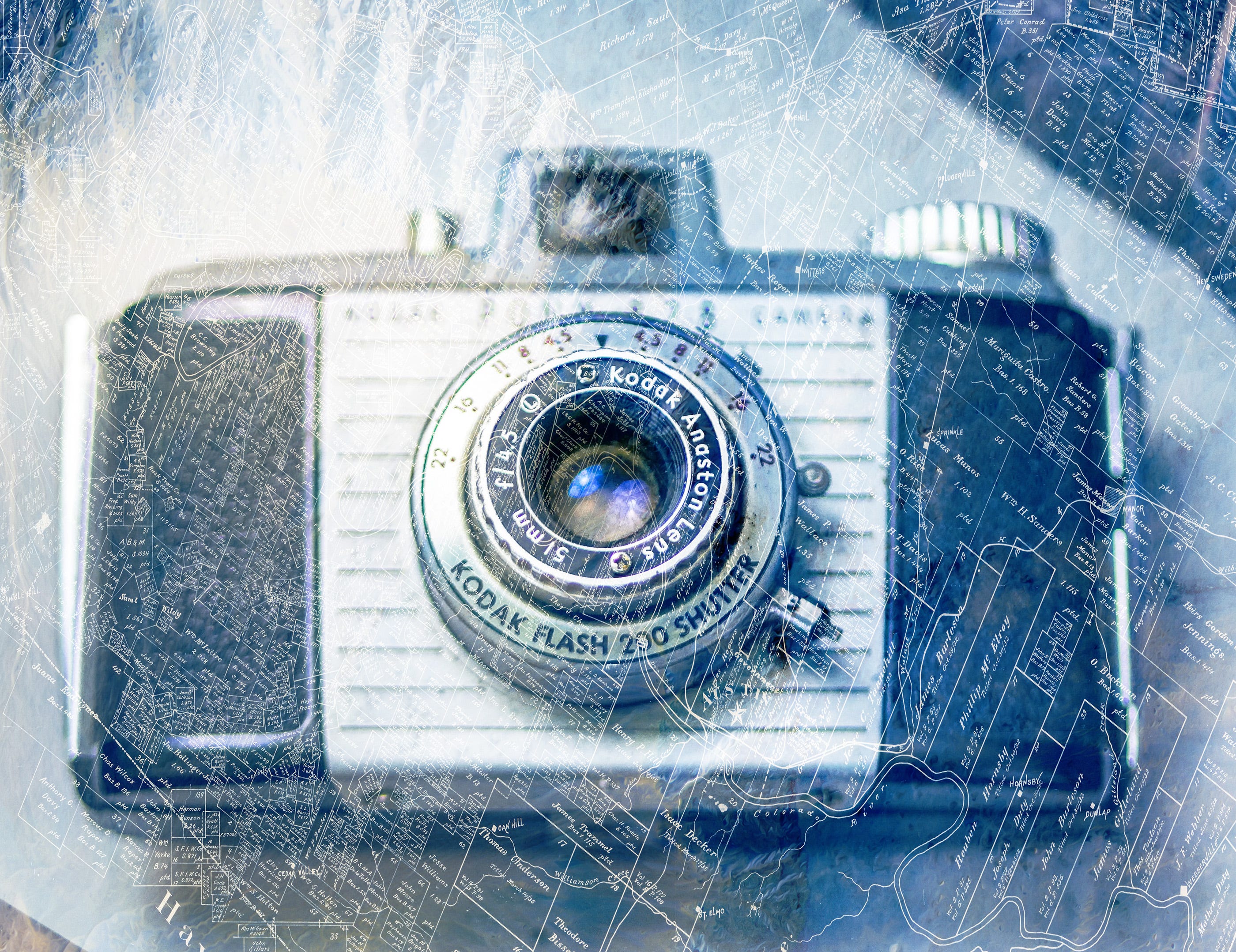
I call it Viewfinder Syndrome.
It happens with old school or even current DSLR cameras where you hold the camera to your eye and peer through the viewfinder (an interesting term) to the object you want to photograph.
With these cameras, something magic occurs when you focus on your subject. Everything seems more pristine and crisp. You have this sense of clarity and depth of field that makes even an ordinary scene look special. Add to that the physical constraints imposed by the viewfinder itself: it removes all distractions from the outside and inside the viewfinder forms a black rectangle that makes the image before you look as if it is in a physical frame reminiscent of a work of art on a museum wall.
Viewfinder Syndrome happens to me when I start to believe, because of this optical enhancement, that whatever I see through the viewfinder will make an incredible photograph. It usually occurs on a trip where I’ve exhausted the obvious sights but I’m still in that semi-hyper excited mode from seeing so many photo-worthy scenes. I just want to keep it up. So I convince myself that, oh, that’s a lovely rock! Click. Isn’t that bark incredible? Click. This trash bin looks so artistically posed in the viewfinder! Click.
Then I look later and see images of an ugly rock, boring tree bark and a trash can that is, well, a trash can. In the moment, I had let Viewfinder Syndrome convince me of a rightness that wasn’t there.
I recognized an example recently of Viewfinder Syndrome in a documentary of a famous musician. In one scene, he’s working out a new song with his band. It’s in the style of his most famous work from decades earlier. But to me, the lyrics are trite and the singing sounds almost like a caricature of his younger self. And yet, in shots of his band, they are all smiling and nodding along as if he’s written a masterpiece.
He’s got no one there to tell the emperor that he has no clothes.
In my new book, The Creative Wild, there’s a chapter on the creative tool of Re-creation. This means to re-create—essentially copy—the work of others or even yourself. It’s a fabulous tool for learning. It’s a terrible tool for progressing once you’ve learned your craft. It’s like a chainsaw: great for cutting logs. Not so much so for trimming your fingernails.
When you start re-creating work from your past—repeating what worked before but not stretching into new territory—you’re either catering to fans who never want you to change, or you’re quickly on your way to mediocrity. Or both.
I understand how fame and the affirmation of those loyal to us can lead us into a kind of Viewfinder Syndrome. But it isn’t inevitable. Some artists and musicians—Paul Simon comes to mind—keep re-creating not their work, but themselves, well into their 70’s and beyond. They don’t rest on what they’ve done. They build on it, striving to continually make something new and fresh.
We may not be able to discern this on our own. When I’m fully into Viewfinder Syndrome, I rarely realize it at the time. Distance and the objective input of those who aren’t caught up in it is what helps me. And you. And even famous creatives who can get stuck without realizing that they are.
We all need trusted people in our lives who will tell us that our perceived masterpiece is merely a snapshot of a trash can.
This post first appeared on my Substack at stevebrock.substack.com


