
There’s more to this ancient church than meets the eye
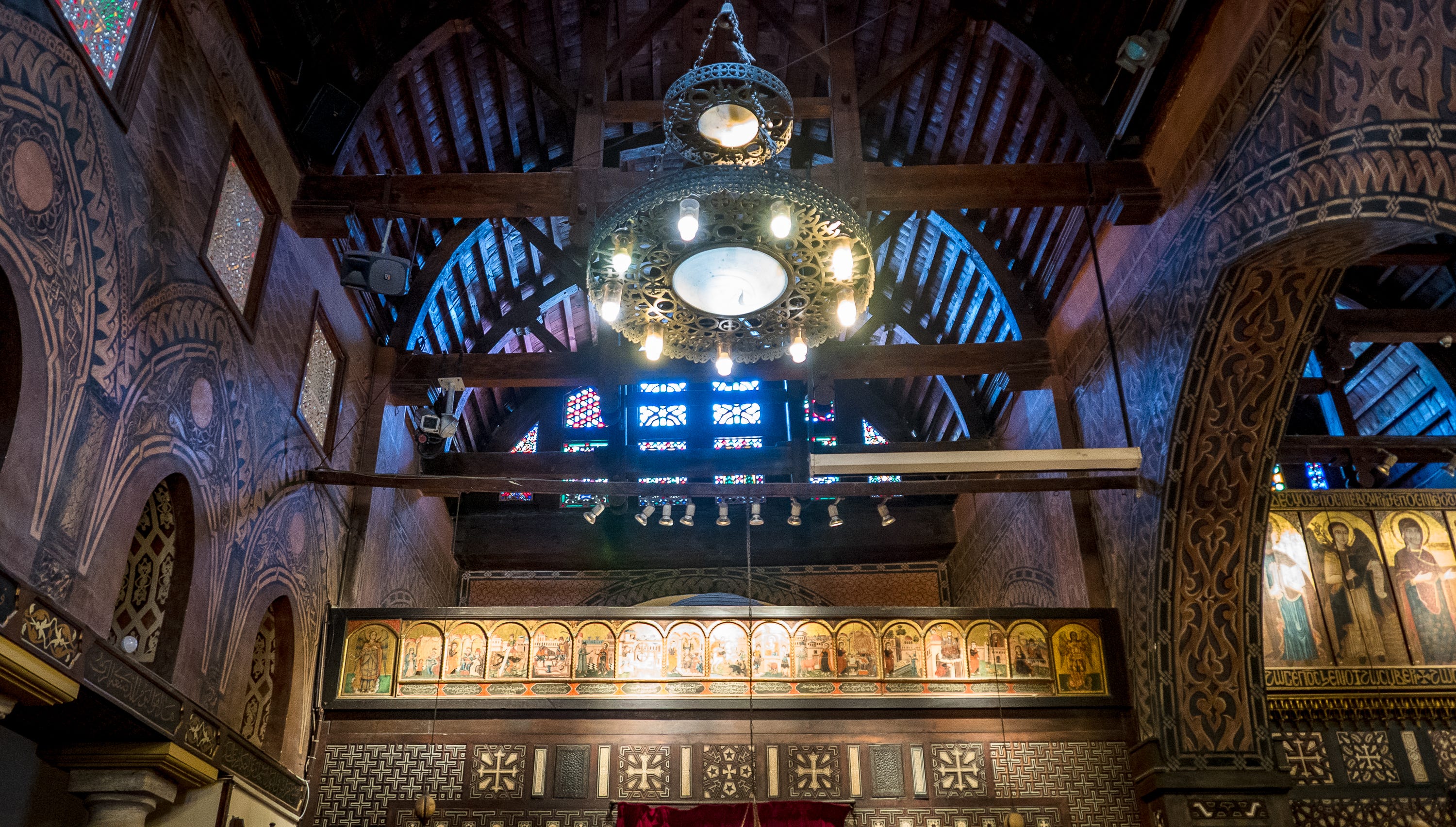
Mystery. You feel it the moment you walk into The Hanging Church in Cairo, Egypt. Old and holy places do that.
Some form of this church has been here in the Old Coptic quarter of Cairo since the 3rd century A.D. The curious name comes from the church’s location atop the gates of an ancient Roman fortress.
In some settings, mystery just happens. The Celtic notion of thin places—places where the boundary between this world and the next seems thinner or even porous—are not locations you can find. They find you. Or rather, you encounter them in unlikely moments and settings, usually when you are not expecting them.
With The Hanging Church, on the other hand, mystery has been crafted into the place for centuries through intentional symbolism.
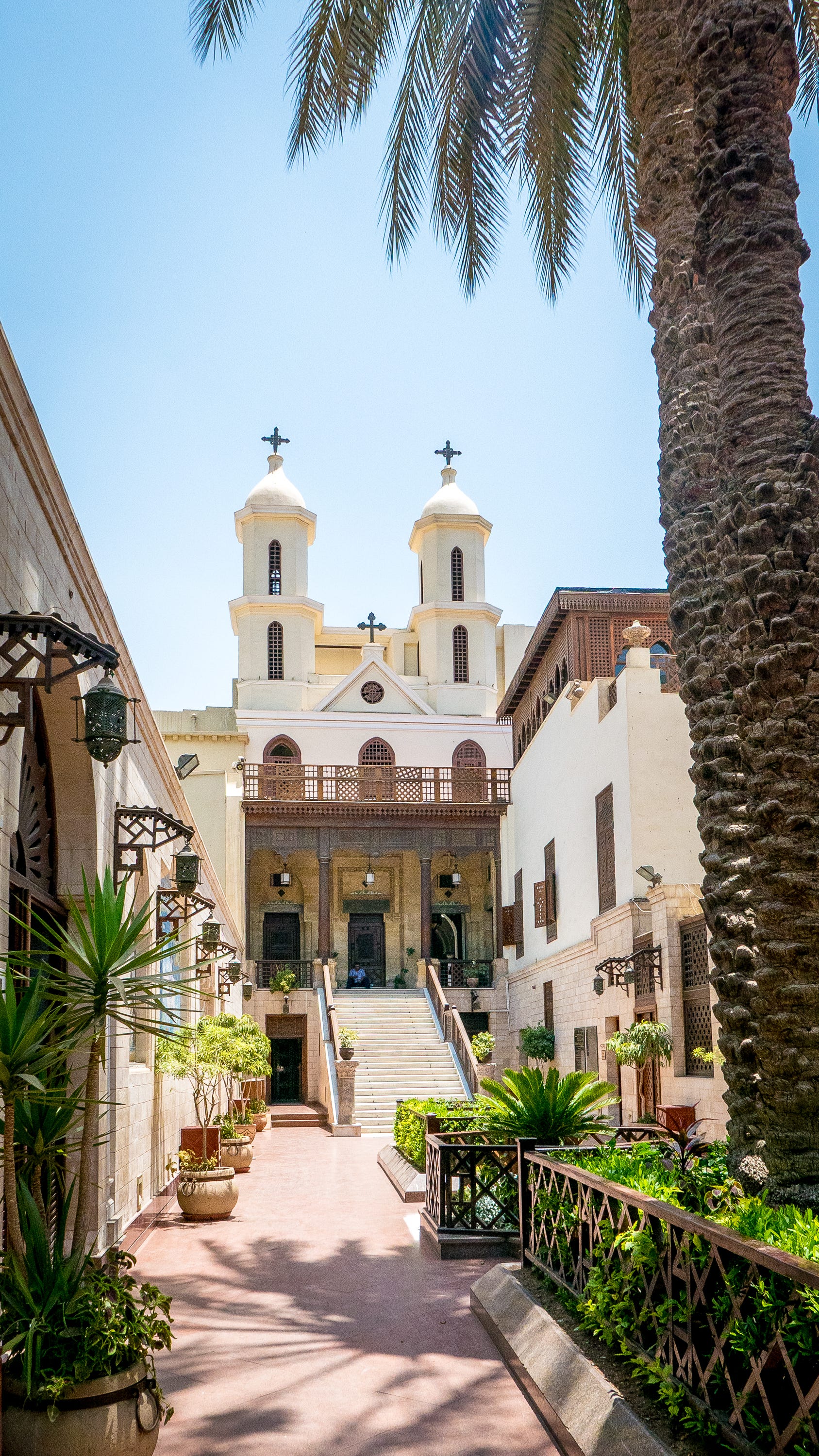
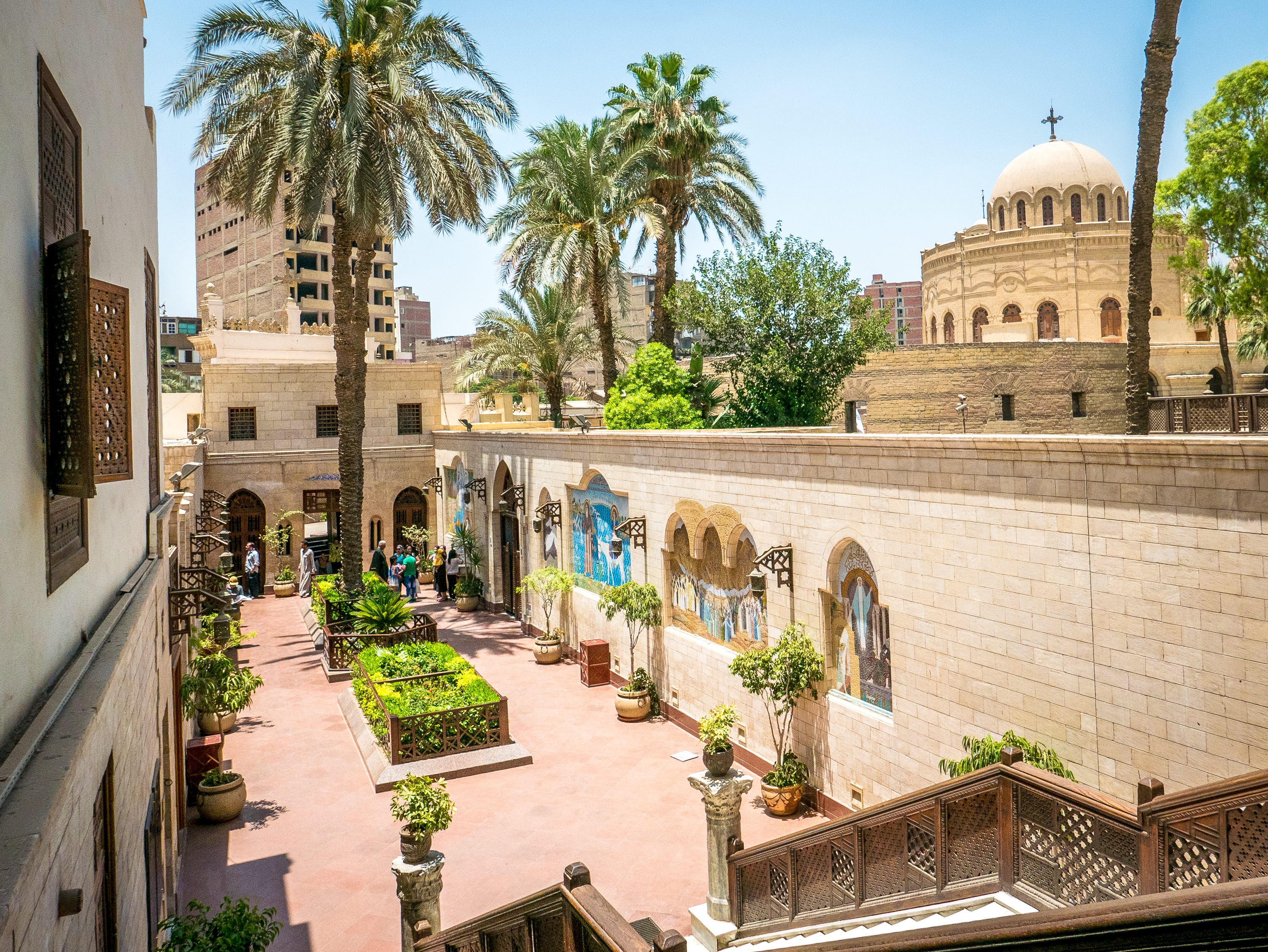
When you pass through the outer gate and enter into the courtyard before the church, you’re surrounded by green.
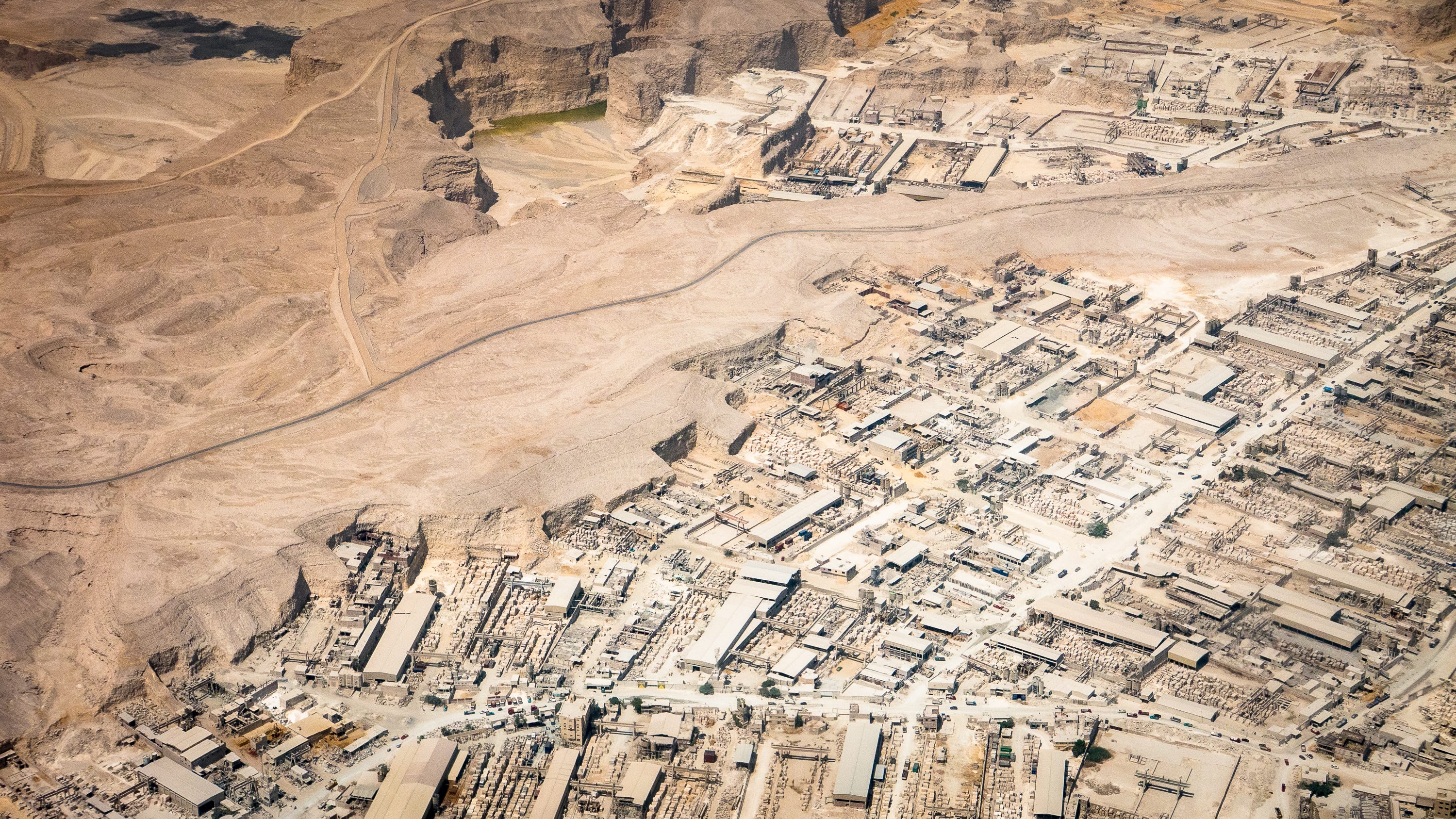
Which, may not seem like such a big deal until you compare even this small amount of greenery to these shots I took from our plane when landing in Cairo. The word “verdant” doesn’t come to mind when you think of Cairo.

But there’s more than botany and aesthetics at play in the courtyard of The Hanging Church. For centuries, this area has been kept planted to reflect the evergreen nature of eternal life. You walk in off the dusty street and you feel something is different.
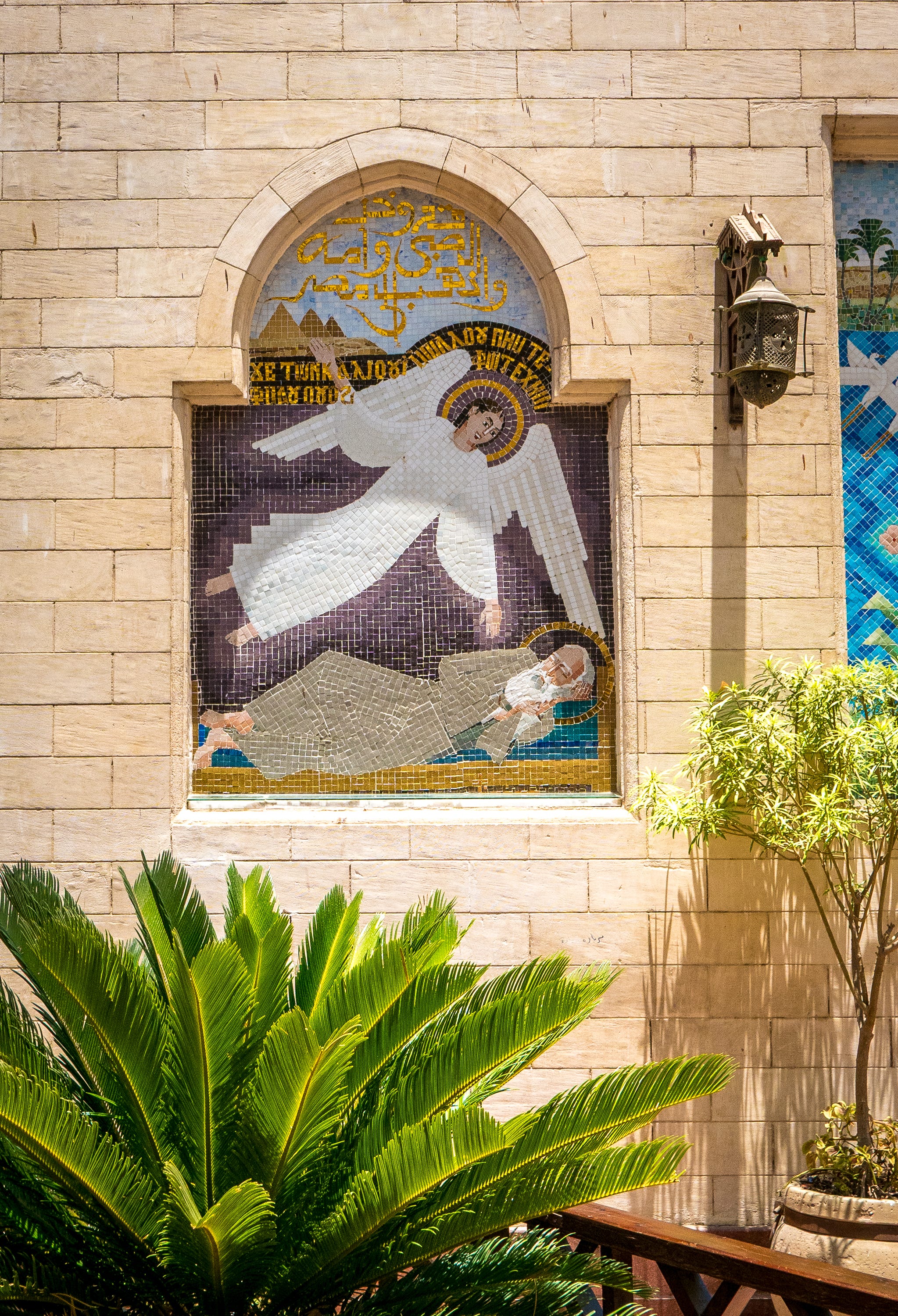
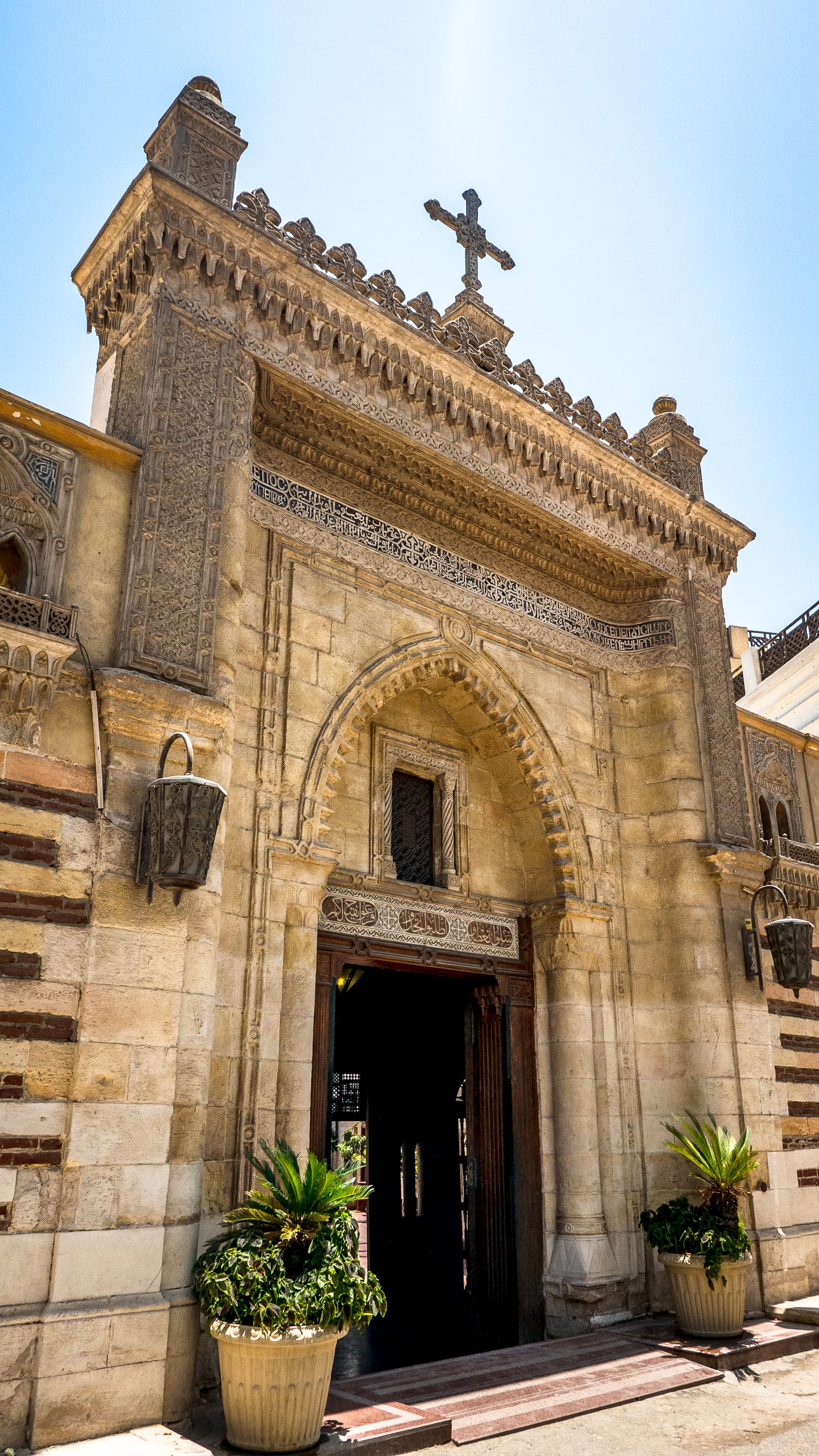
From the courtyard, you ascend the stairs (meant to reflect one’s spiritual ascent into a holy place) beneath the canopies used to keep the relentless sun at bay.
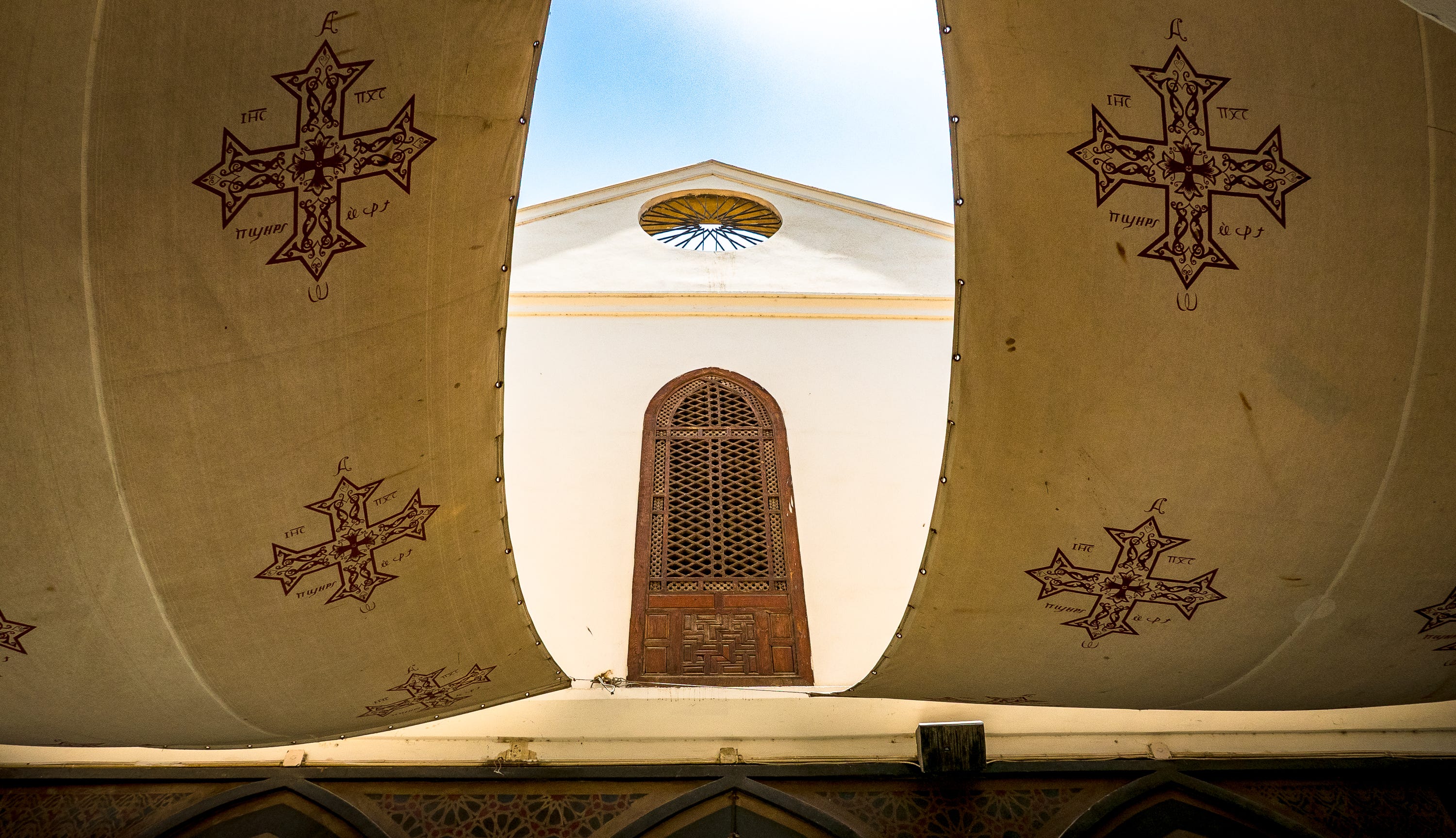
You then pass through the intricate doorway (where I’m sure each geometric pattern has its own story).
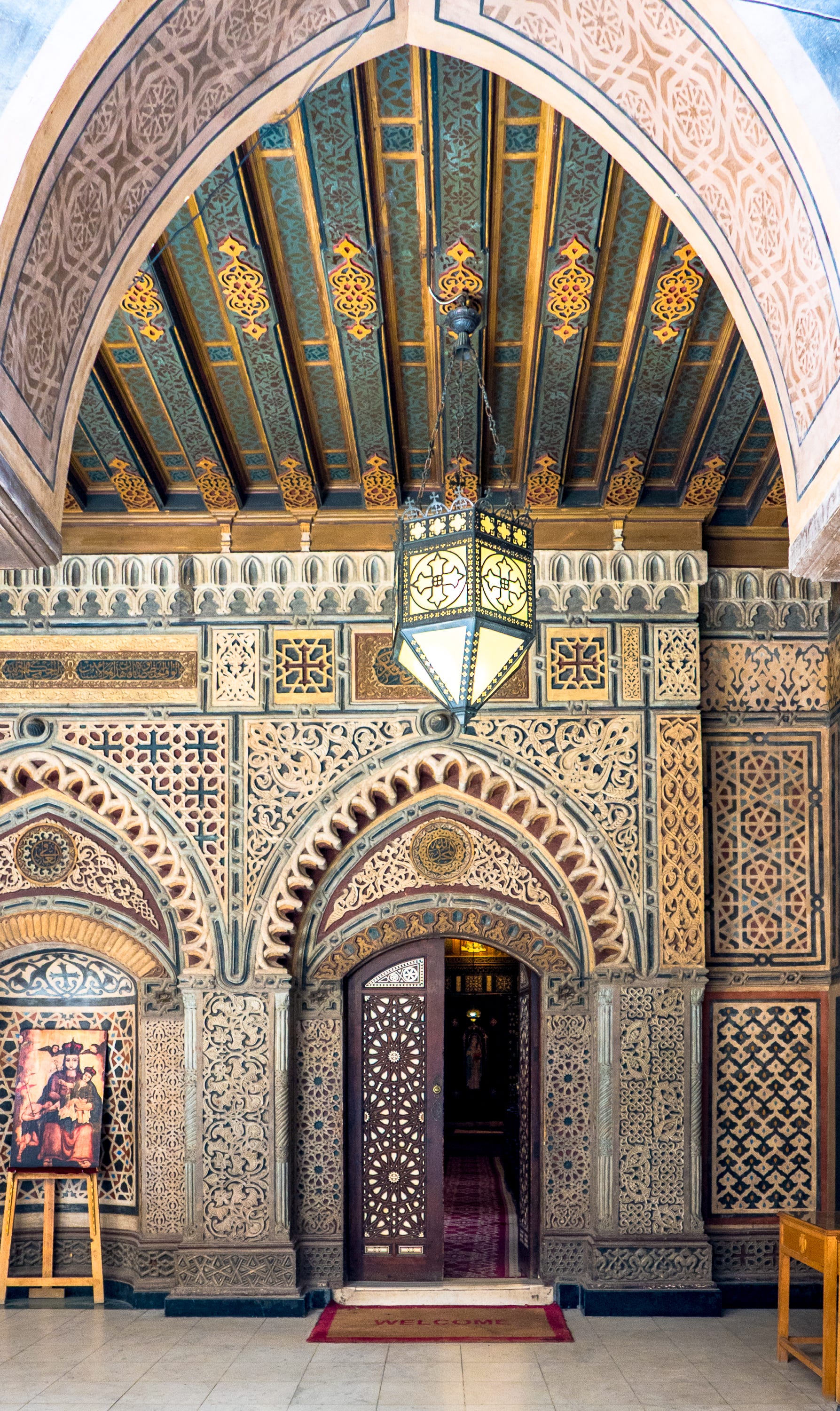
Once inside, one of the first things you notice is the ceiling. It was constructed to represent Noah’s ark, which you can tell by the curved vaulting.
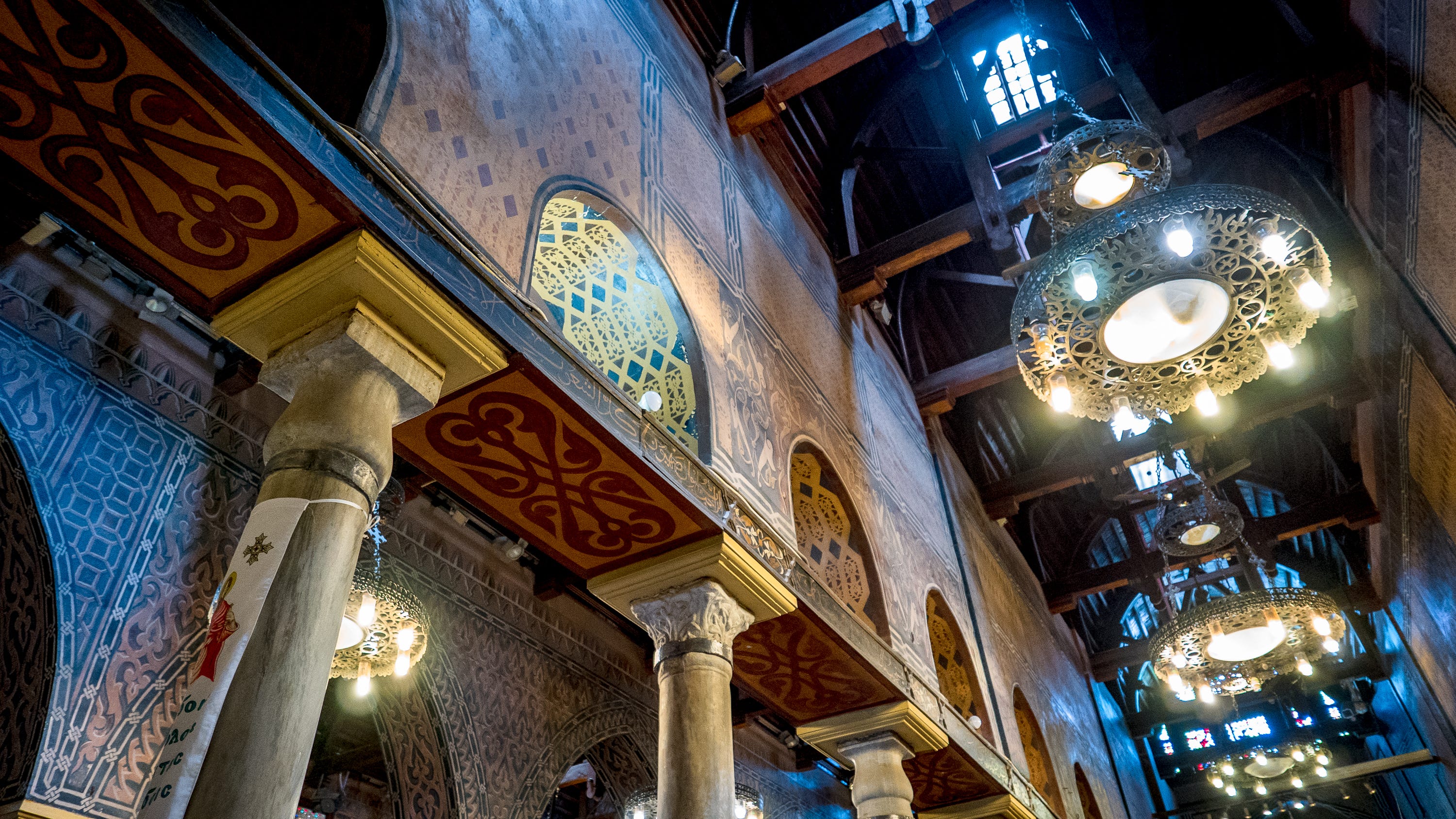
The shape, that of an inverted hull, is meant to remind us of God’s salvation, first to Noah’s family through the flood, later to the Israelites from Egypt, and finally, for all humanity, through Jesus.
Look around, and you’ll notice that the building is supported by 12 marble columns to represent the 12 disciples of Christ. One of them (sorry, for no photo of it) is darker than the others, apparently representing Judas.
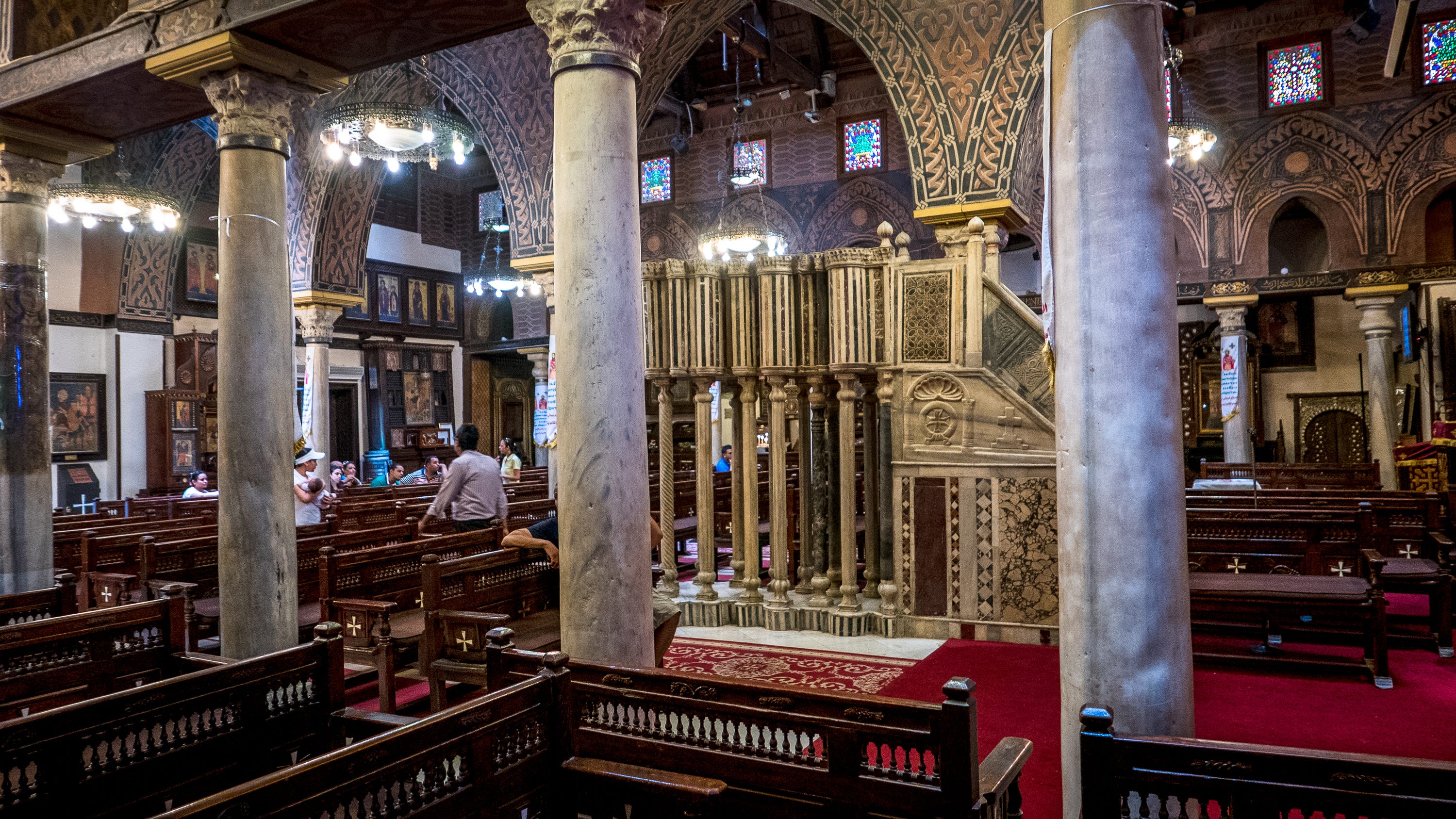
One thing you won’t see—our guide assured us it is there but for obvious reasons is kept unknown to outsiders—is a secret door that connects to hidden passageways. This door has been used throughout the centuries at times of persecution against the Coptic Christians when the bishop, patriarch, and monks would flee from attackers. In one instance, our guide informed us, some brave monks grabbed brooms and pretended to be cleaning out the “empty” church to allow the others the time to escape through the hidden door. The sweeping monks paid for their bravery with their lives.
That theme of martyrdom, along with that of victory of good over evil, is one you see represented in the many icons and paintings throughout The Hanging Church. When you look up, you will behold my favorite symbolic examples there: orb-shaped objects suspended from the ark-like ceiling. These are ostrich eggs. Their meaning is twofold.
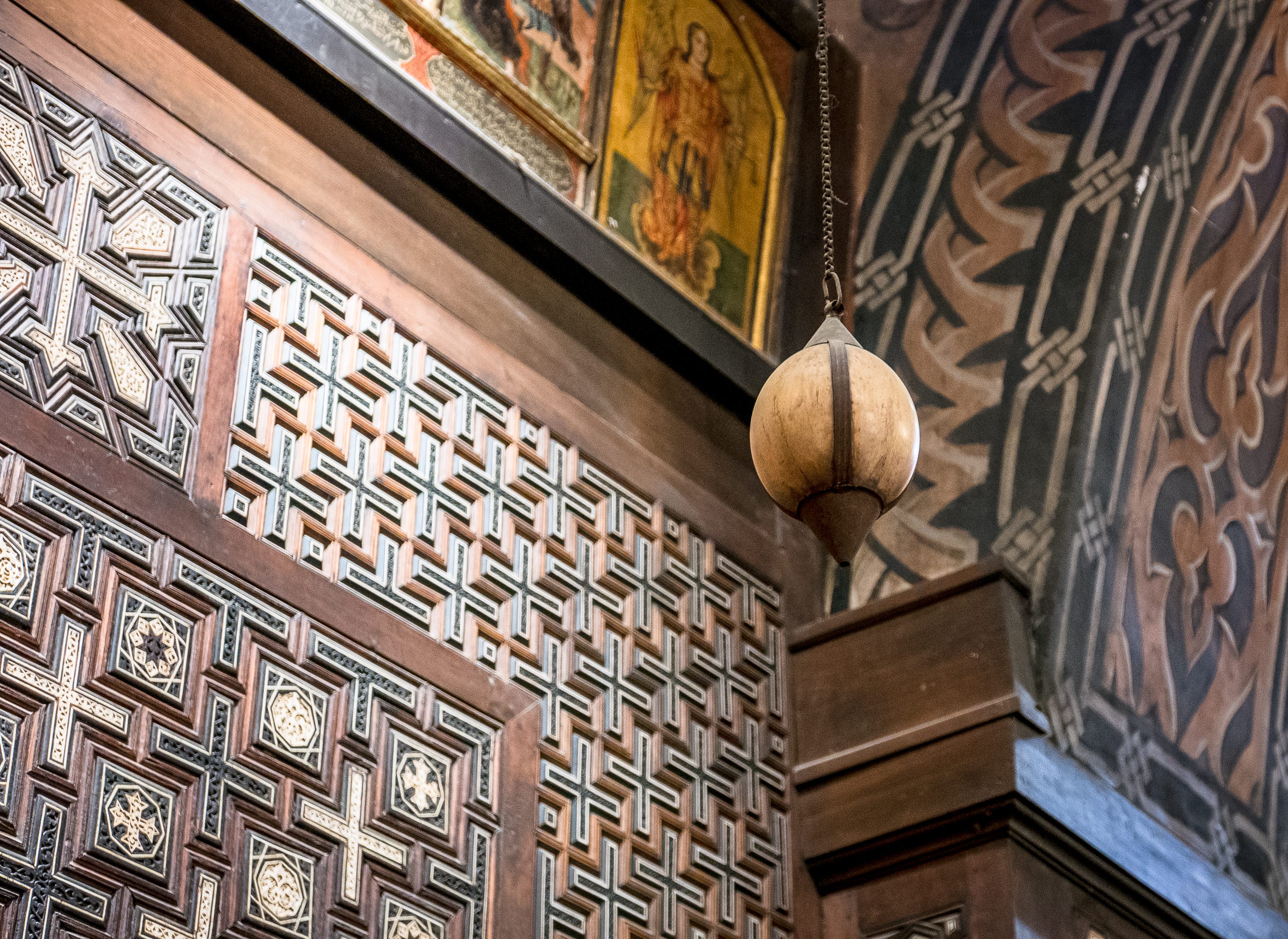
First, apparently, the meat of the ostrich lasts a very long time, symbolizing eternity. Somehow, old ostrich meat didn’t exactly make me all giddy about heaven. But the second meaning appealed more. Ostriches, it seems, make good parents and both the male and the female guard over and tenderly watch the egg until it hatches. This symbolizes the fullness of God watching over us. Pretty cool meaning for what could otherwise be seen as just old eggs dangling above you.
But that’s the point, isn’t it, of all symbolic art? That if you just glance at it, you take in only a superficial understanding and you likely think, “No big deal.” But what fascinated me about The Hanging Church was the intentionality given to so many elements there. It not only adds to the mystery. It makes you realize that there are deeper levels to so many things all around us.
You don’t necessarily have to travel half way around the world to a 1800-year-old church to realize that. But if you do, you won’t forget it
This post first appeared on my Substack at stevebrock.substack.com


