
“We shape our buildings and afterwards our buildings shape us.” – Winston Churchill
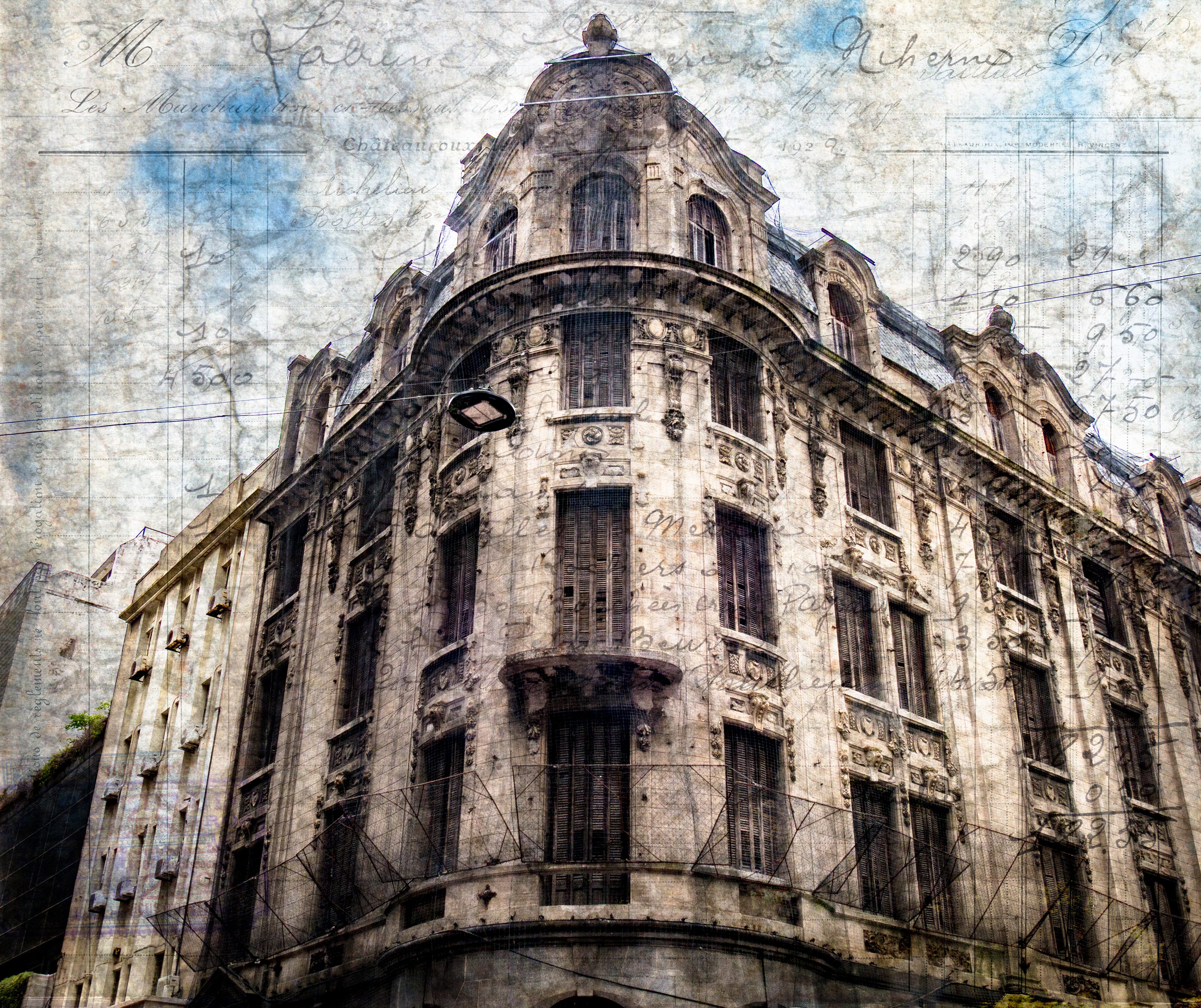
In Hidden Travel I wrote, “Where you are almost always affects who you are.” I still believe that. But lately, I’ve wondered at how precisely that works.
Neuroscientistists and psychologists, it turns out, have some answers for us.
Several years ago, the BBC ran a piece entitled, “The hidden ways that architecture affects how you feel.” In it, writer Michael Bond noted this:
“We now know, for example, that buildings and cities can affect our mood and well-being, and that specialised cells in the hippocampal region of our brains are attuned to the geometry and arrangement of the spaces we inhabit.”
Why our buildings don’t match our needs
The problem is that today’s architects don’t seem to understand that. Bond continues:
“‘There are some really good [evidence-based] guidelines out there” on how to design user-friendly buildings, says Ruth Dalton, who studies both architecture and cognitive science at Northumbria University in Newcastle. “A lot of architects choose to ignore them. Why is that?’”
One reason is that many of today’s architects and designers have been trained in Modernism. That emphasis on simple lines, shapes, and surfaces, however, doesn’t align with what humans tend to like.
Complex is interesting
For example, when surveyed, virtually every group of humans, regardless of culture, inherently prefers rounded surfaces and corners. Every group but two: architects and designers. They gravitate toward sharp edges and rectilinear design. It’s what they’ve been trained to like while the rest of us react more intuitively.
The results are buildings that don’t increase our sense of wellbeing. Bond cites a study done by researcher Colin Ellard who, through both questions and the use of wristbands that measured skin conductance (a metric of psychological arousal), found that, “people are strongly affected by building façades. If the façade is complex and interesting, it affects people in a positive way; negatively if it is simple and monotonous. For example, when he walked a group of subjects past the long, smoked-glass frontage of a Whole Foods store in Lower Manhattan, their arousal and mood states took a dive, according to the wristband readings and on-the-spot emotion surveys. They also quickened their pace as if to hurry out of the dead zone.”
This may not explain all of the ways that places affects us, but it does help me understand to some degree the appeal of buildings built in the past such as those the old town area of Montevideo, Uruguay.
The old buildings of Montevideo
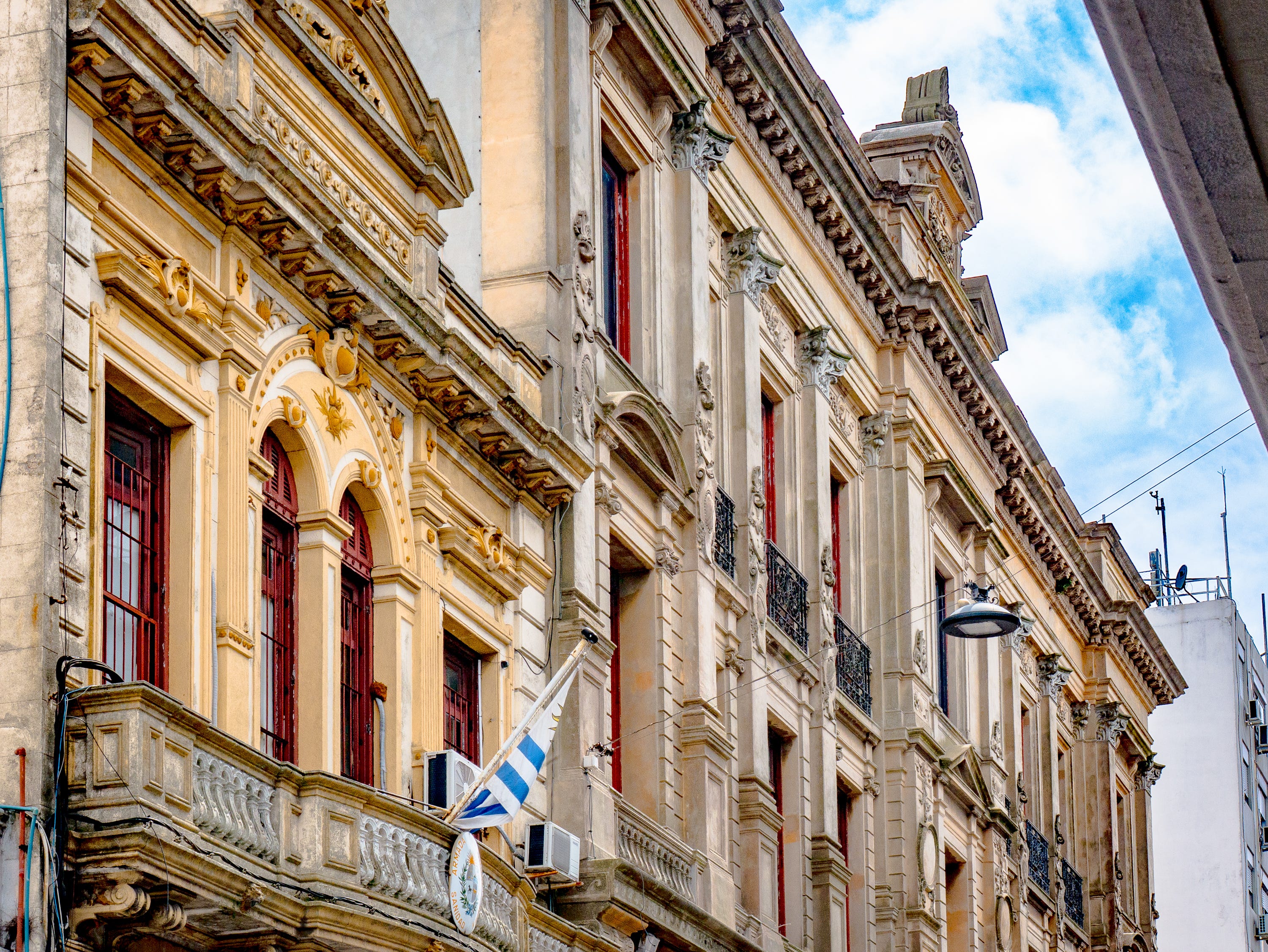
The city was founded in 1724 by Spanish colonists in part to control trade between Europe and the interior of South America along the vital Rio de la Plata. That trade exploded in the 19th century as agricultural exports led to great prosperity. The resulting wealth, in turn, drove the extensive building in the city, with homes and businesses rivaling those in any European city.
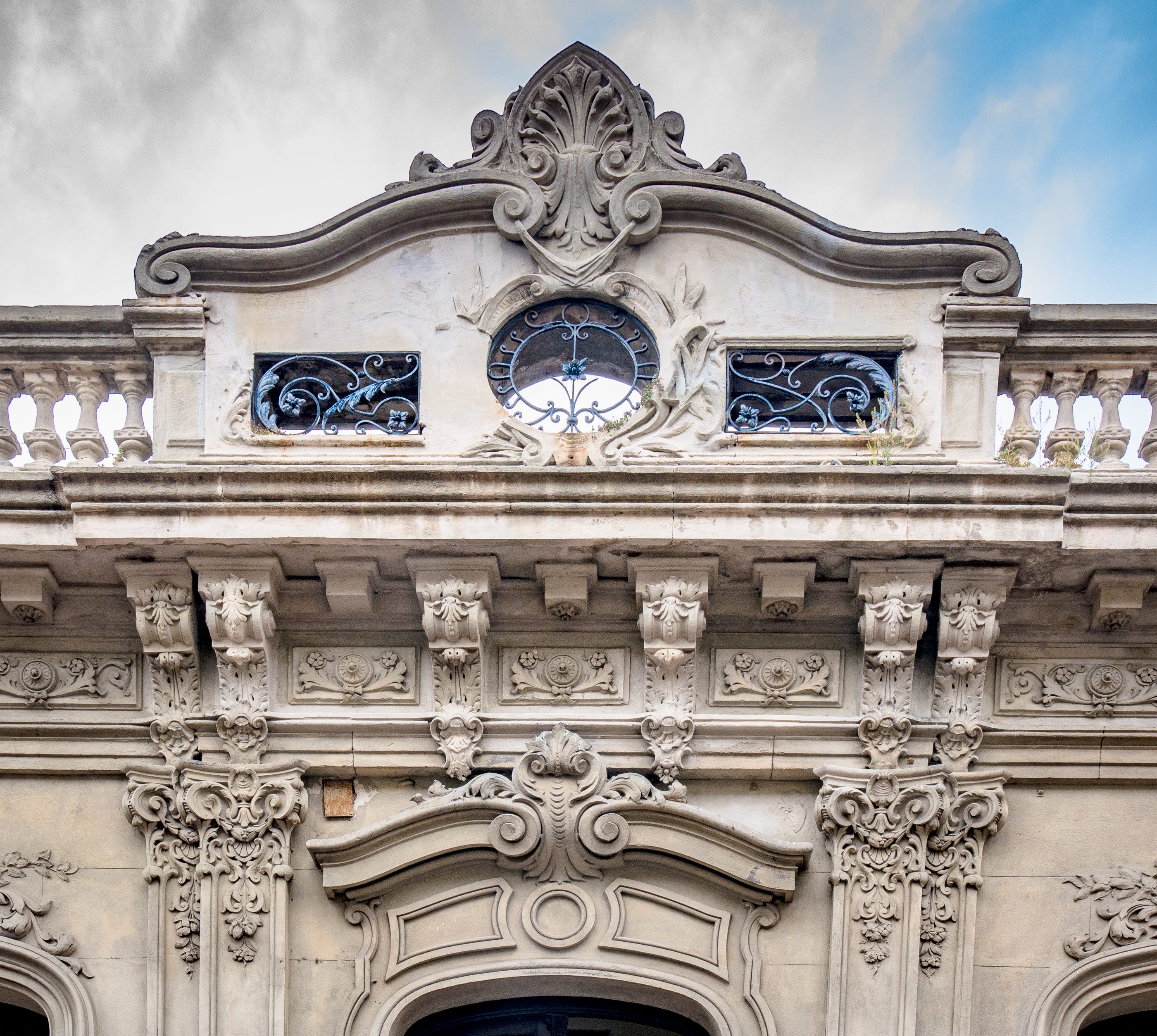
Alas, architectural wonders—the extensive use of wrought iron from France, azulejos (decorative tiles) from Portugal, or Italianate design—were no match for a combination of dictatorships throughout the 20th century that led to economic collapse, and then a spate of complex inheritance laws that split up ownership of the buildings to multiple siblings and relatives (making agreement on costly restoration difficult).
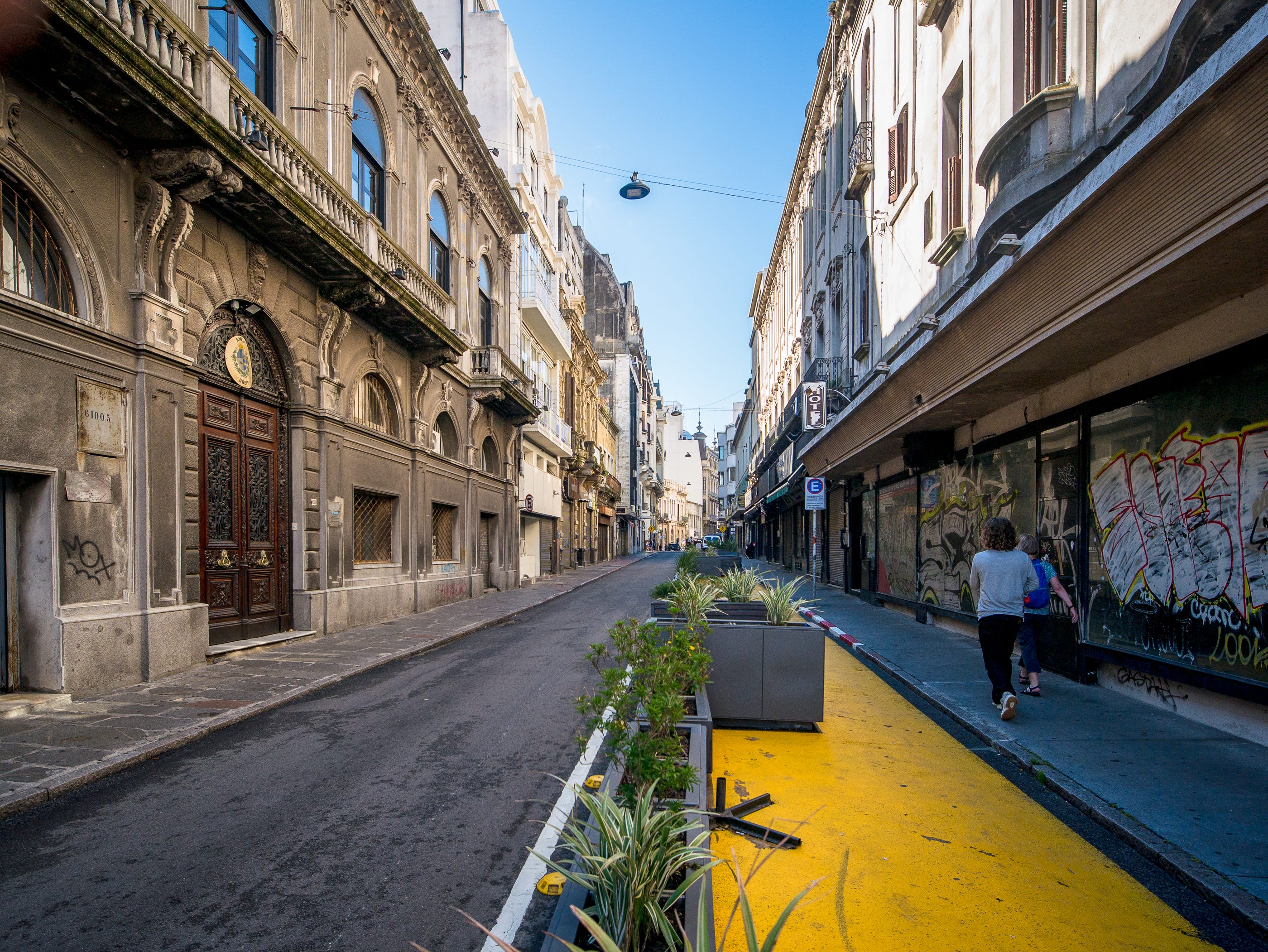
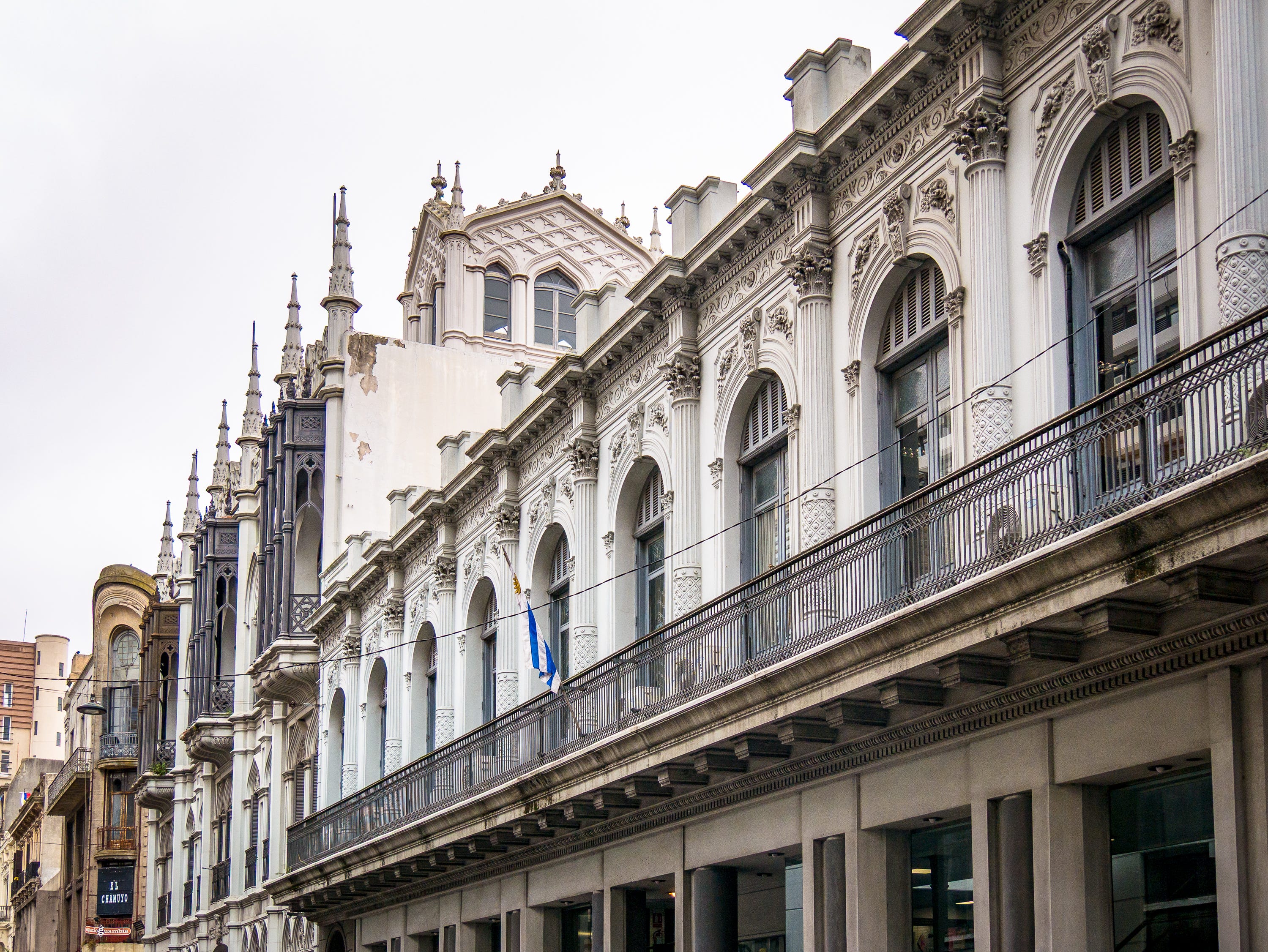
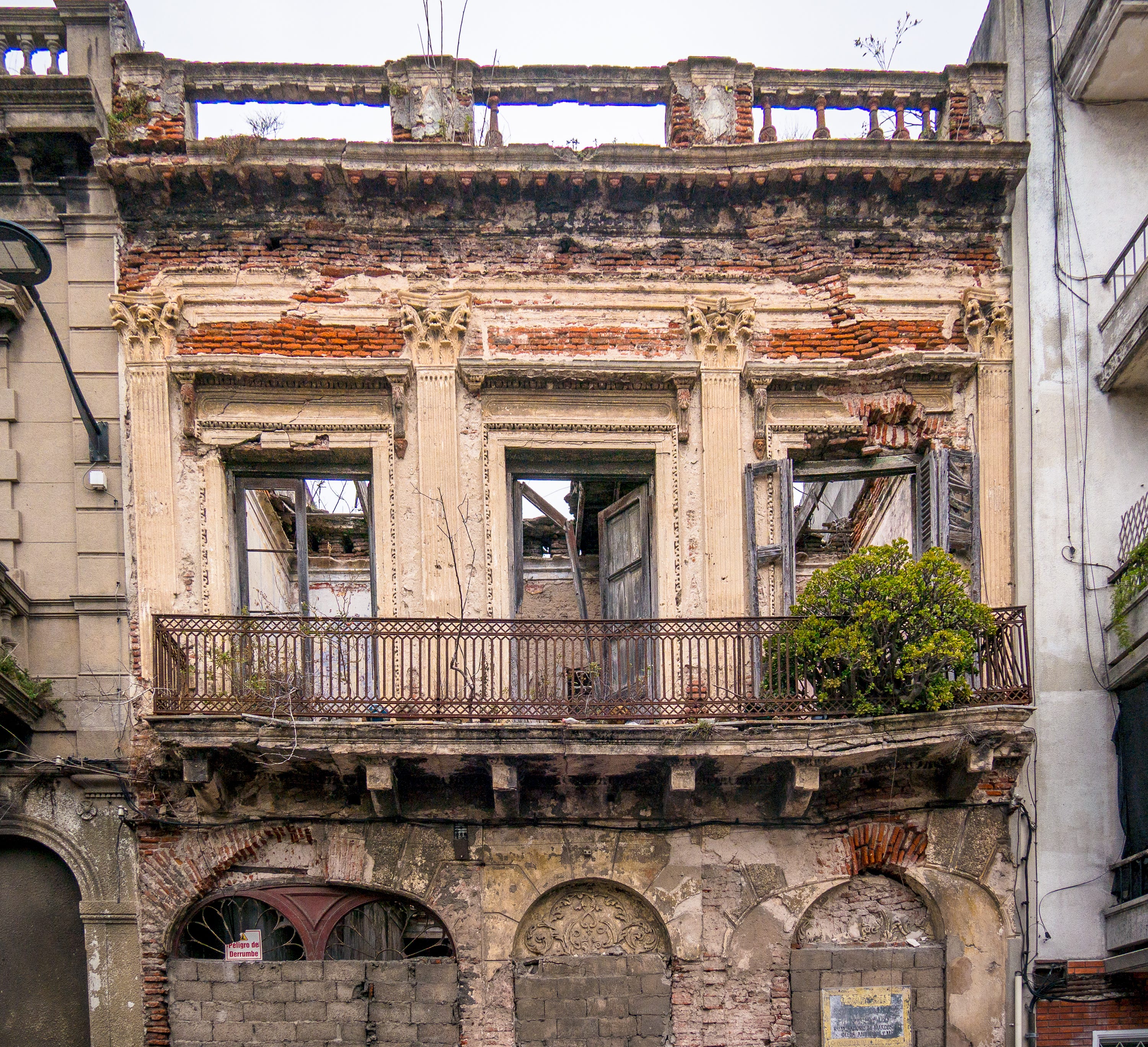
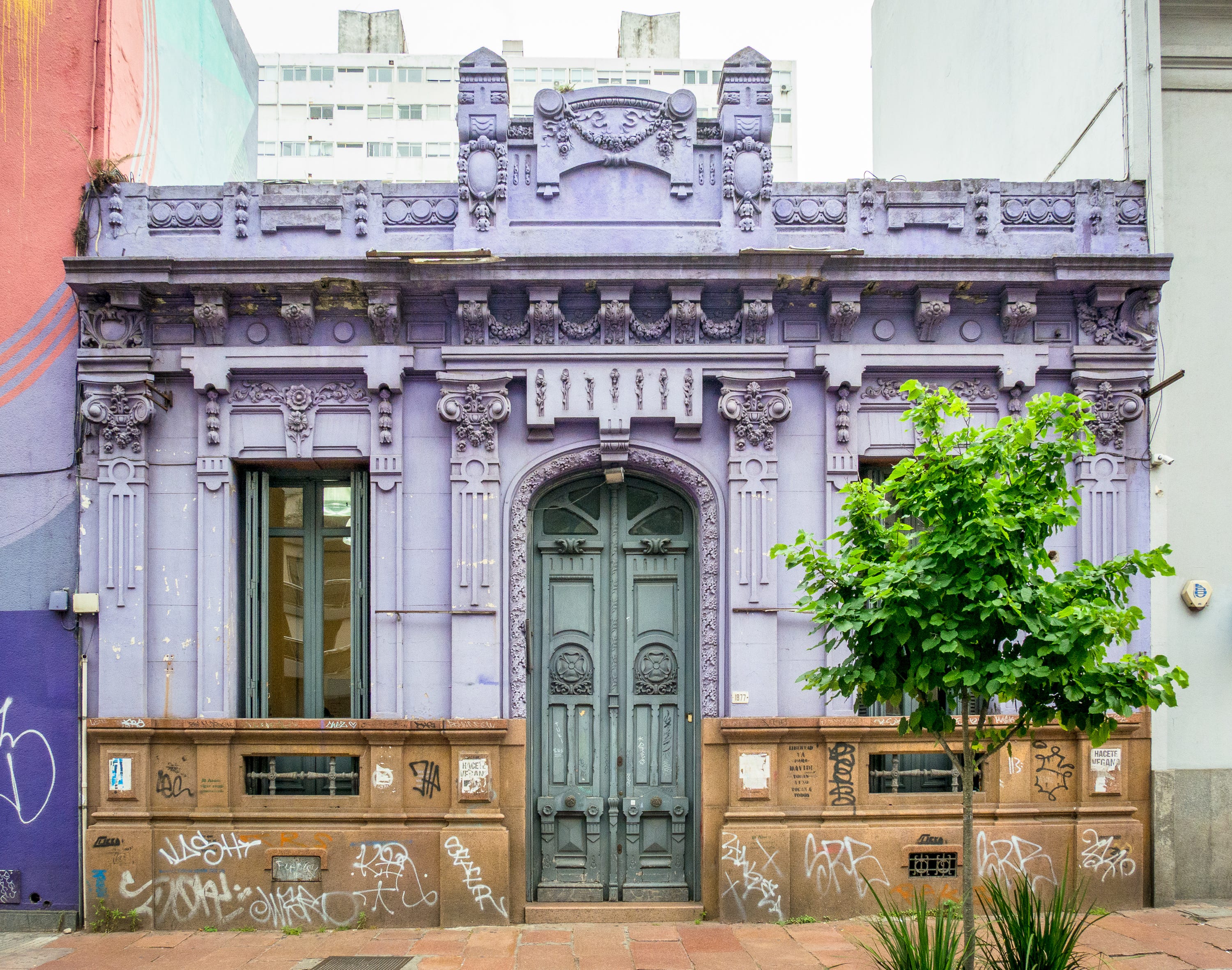
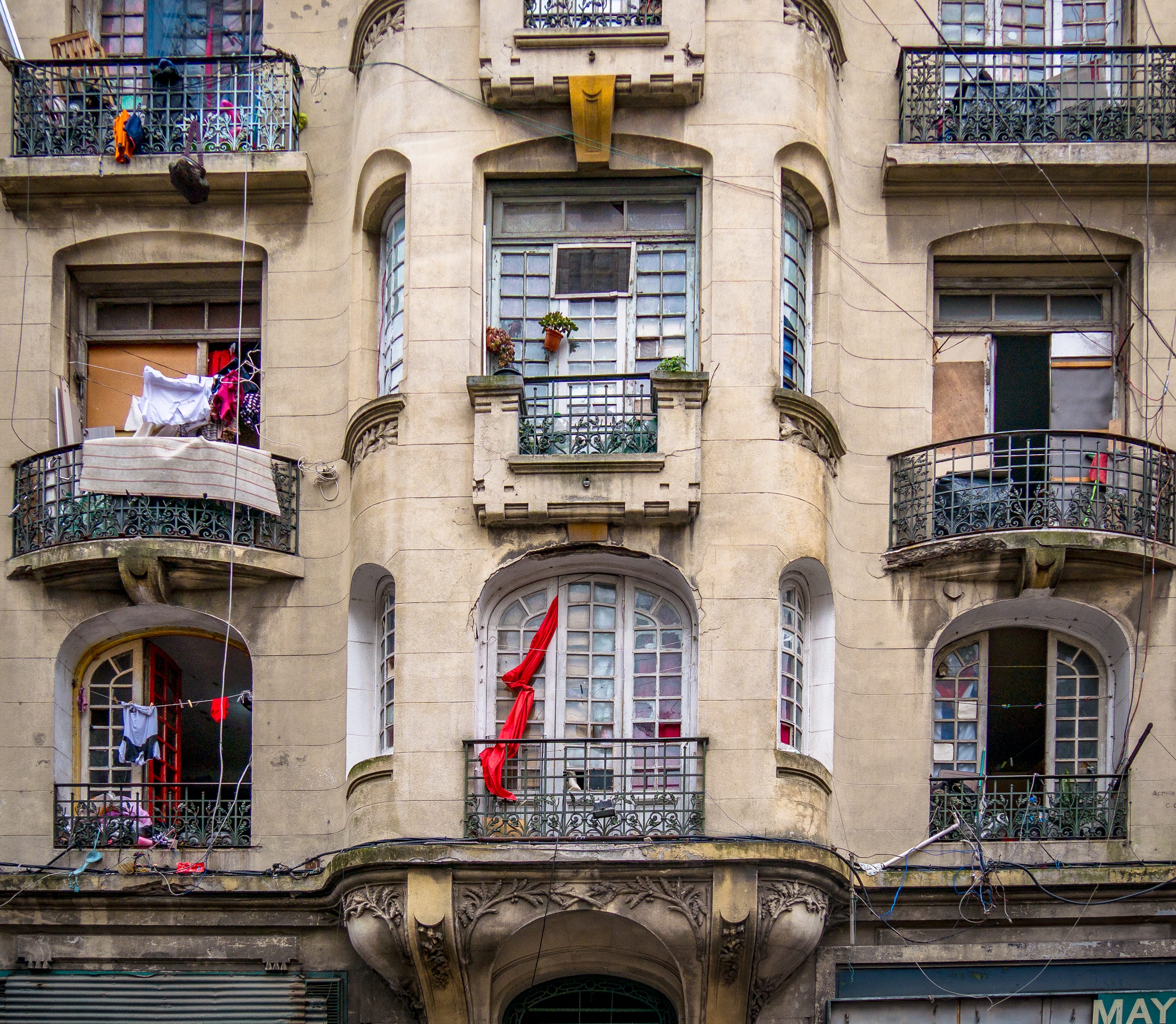
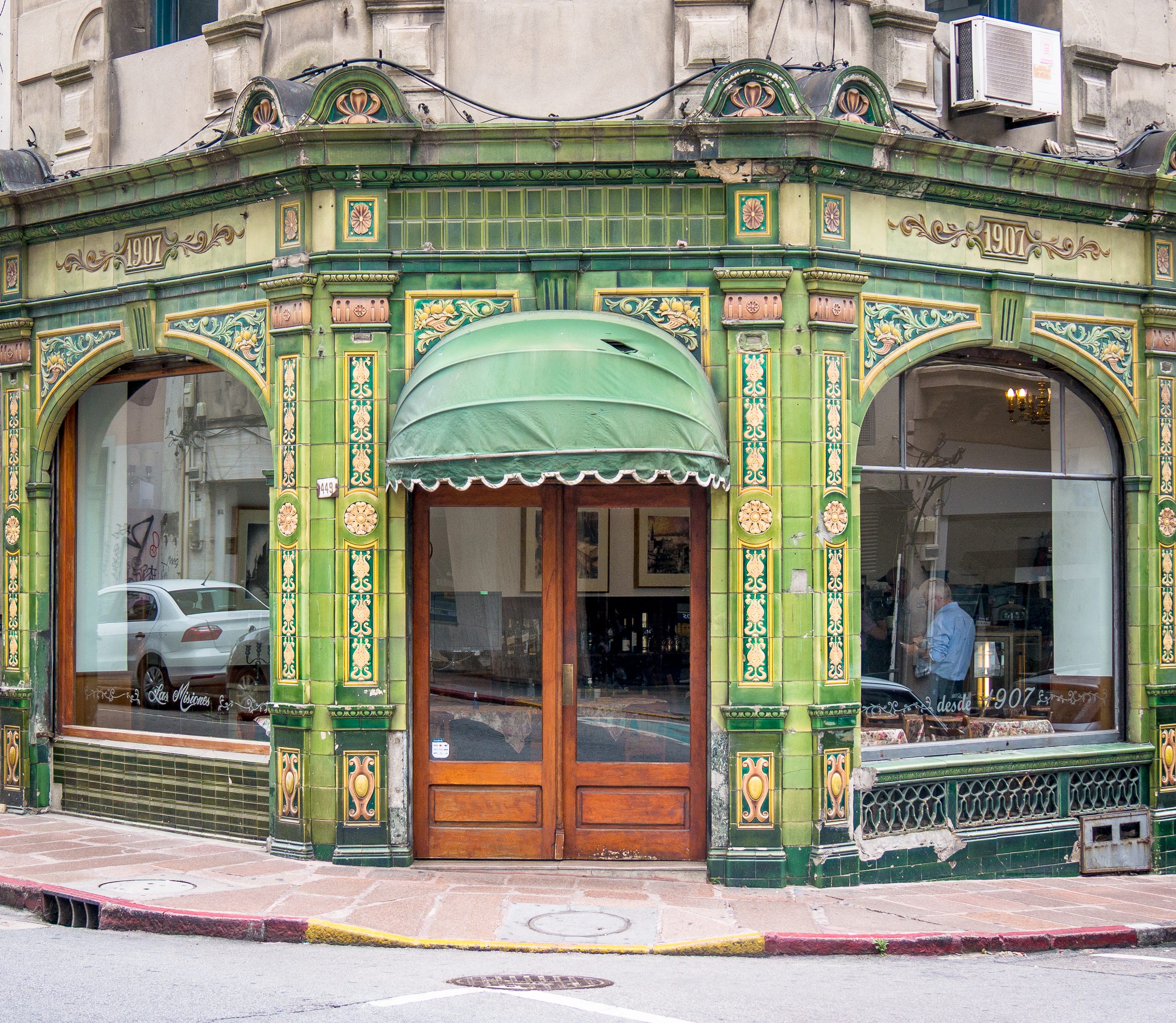
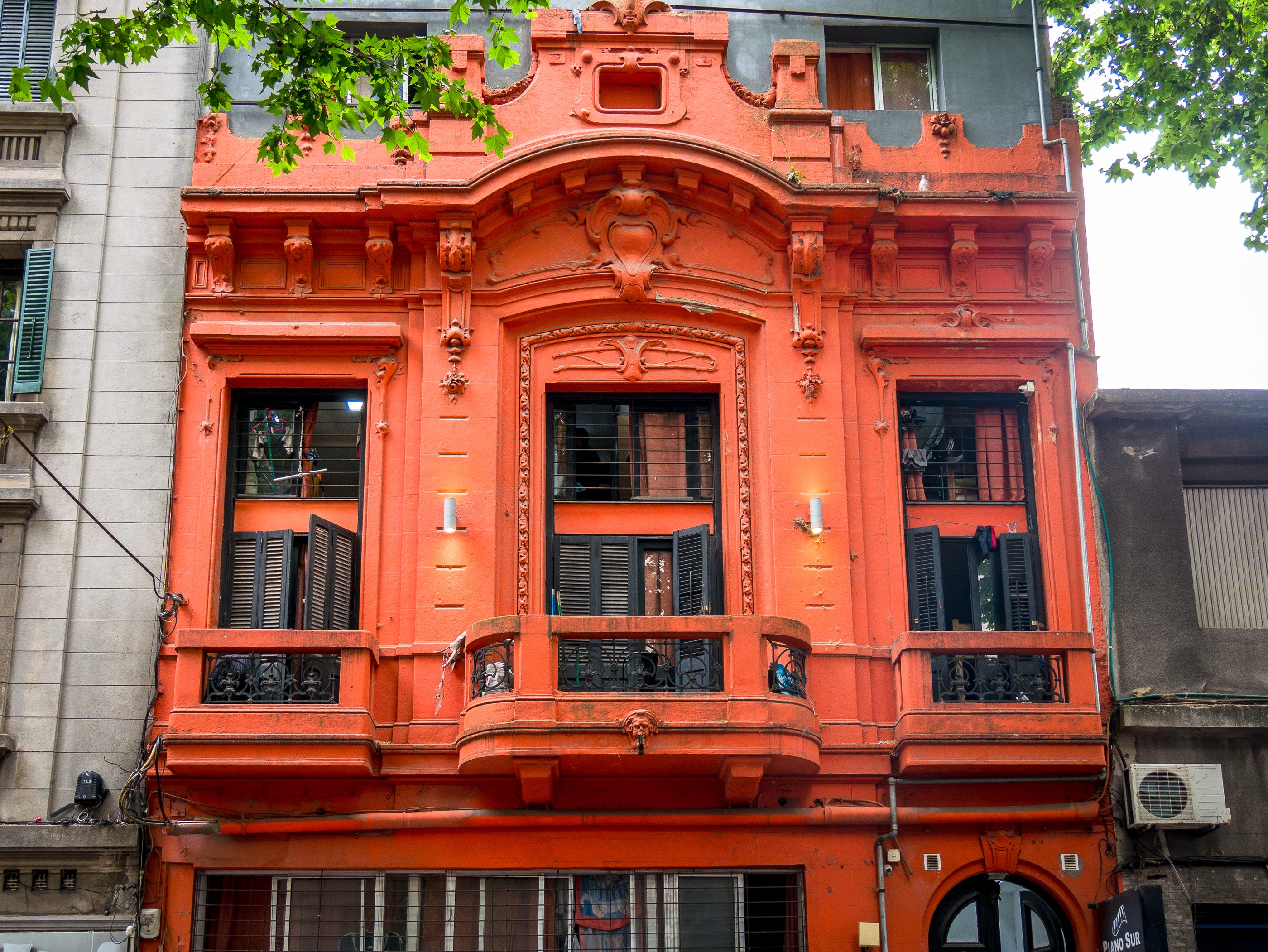
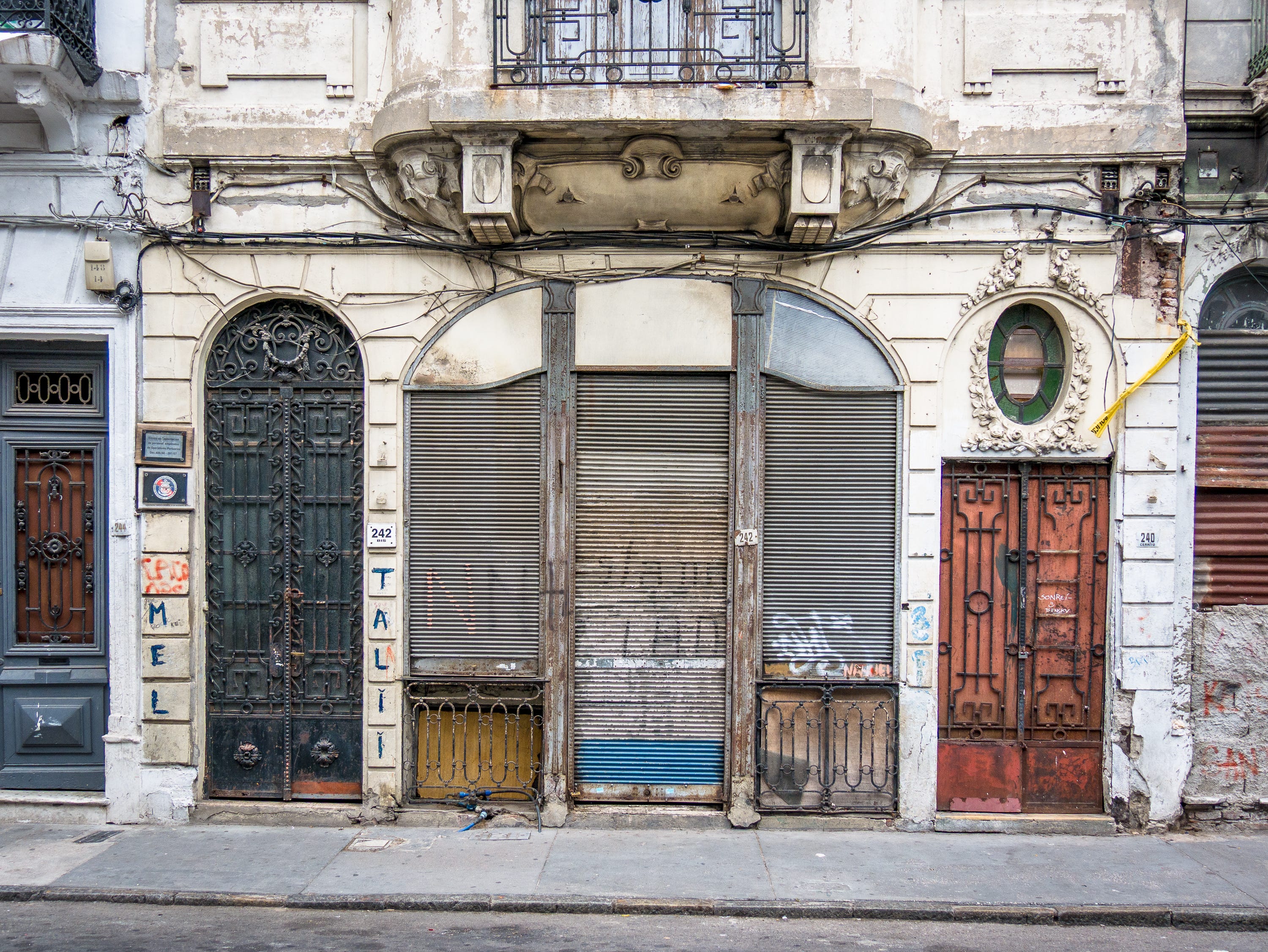
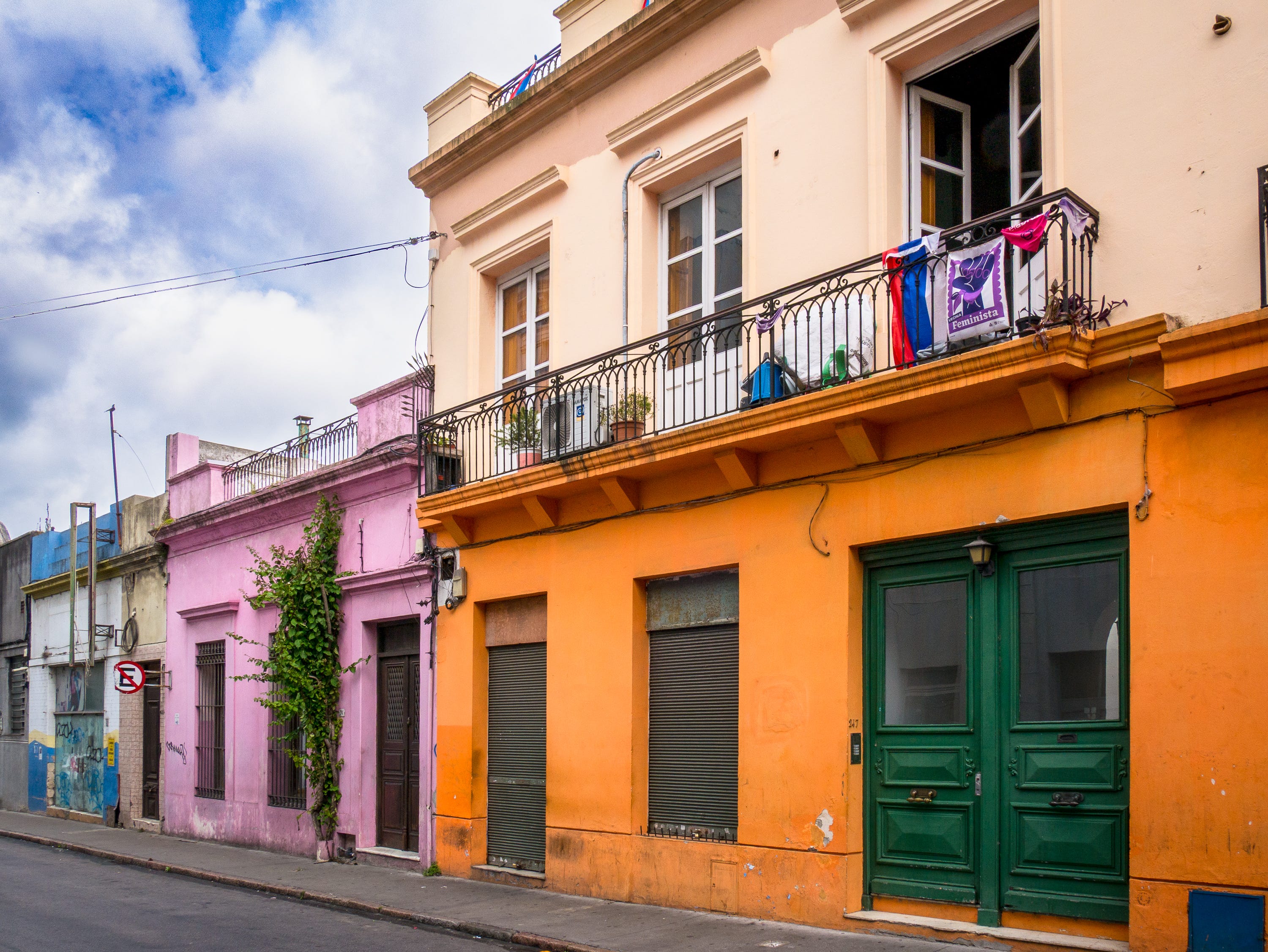
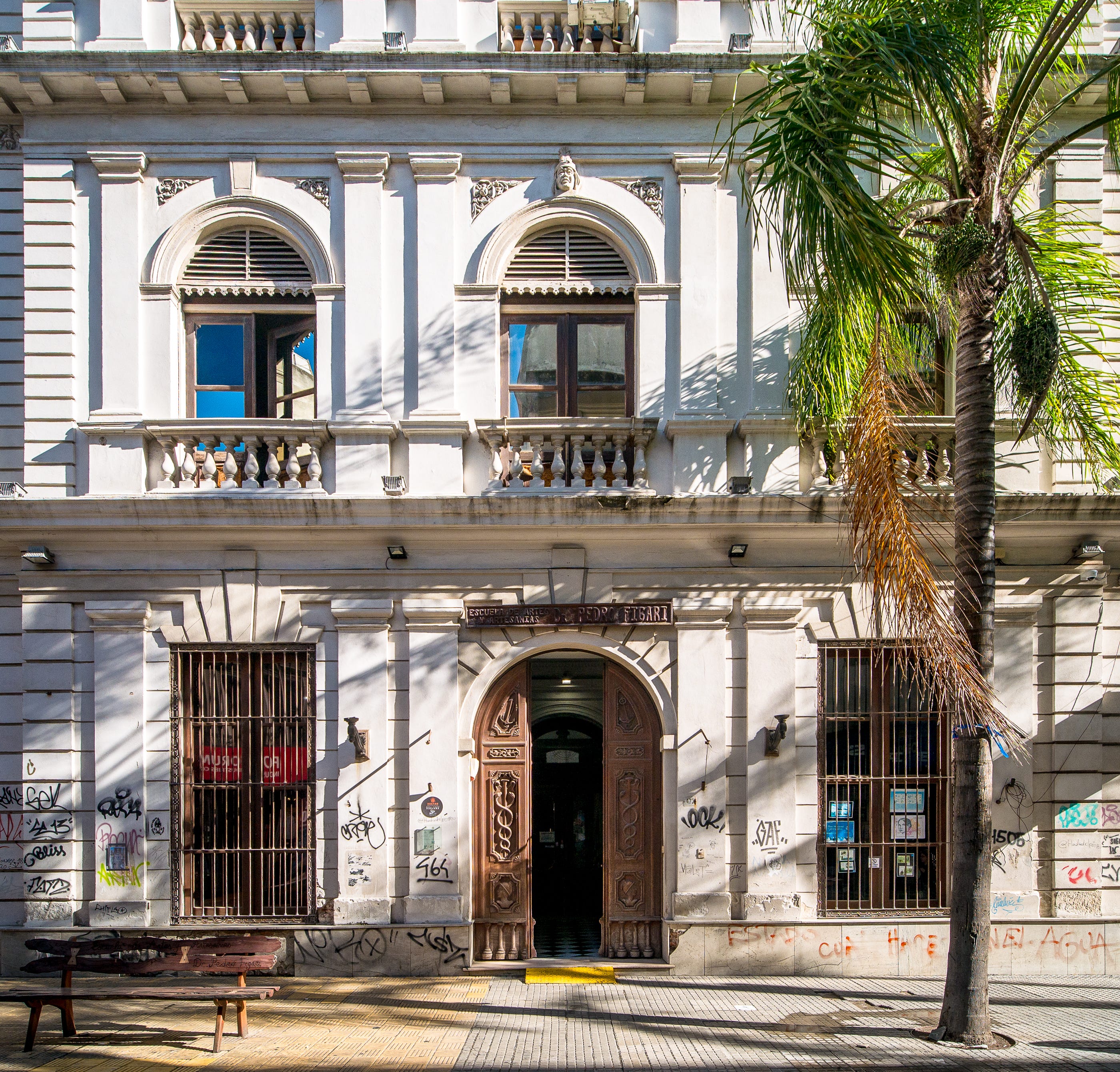
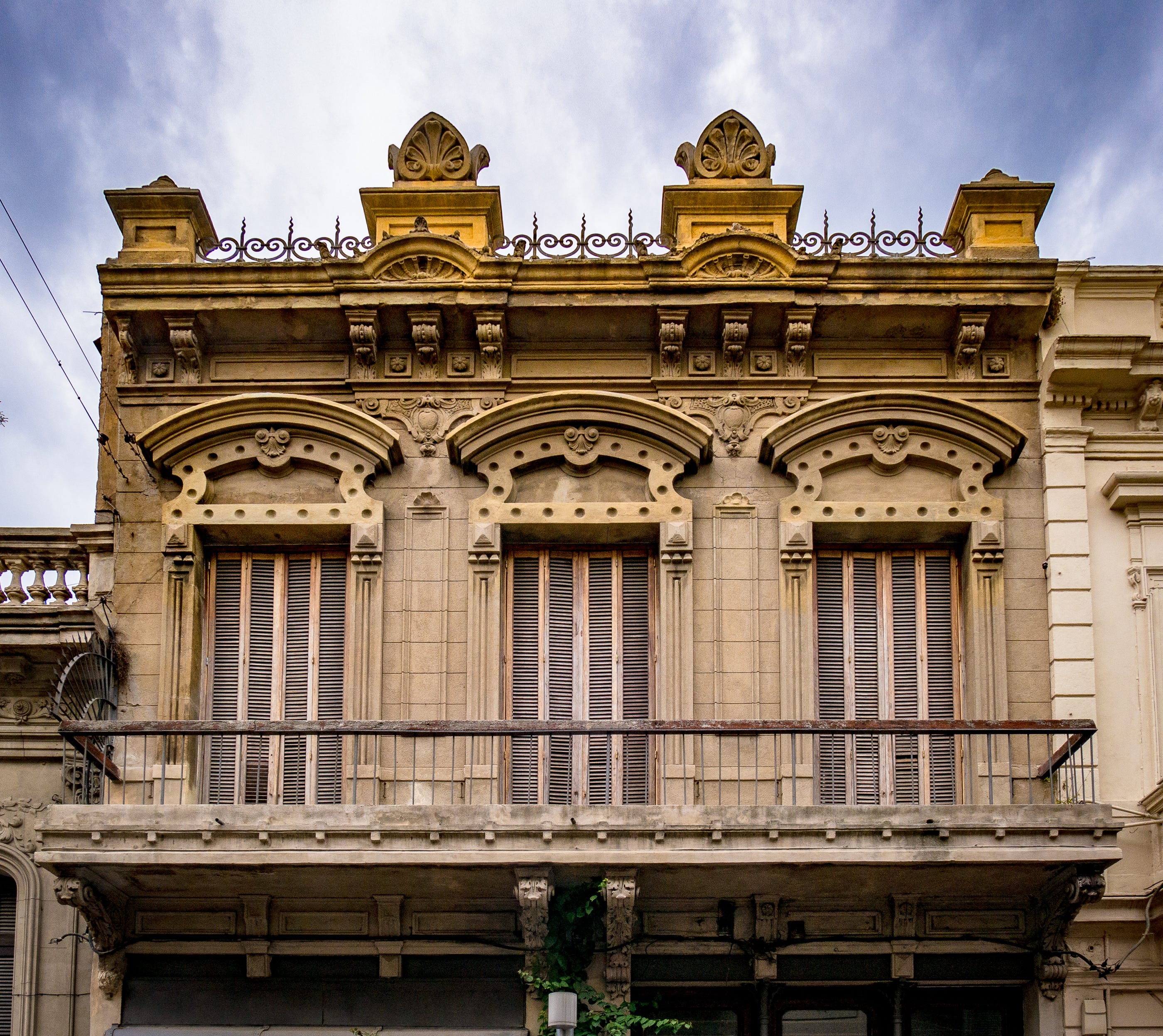
What you’re left with is the old town section of Montevideo, block after block of buildings in all stages of decay and renewal. And yet, even in those wrapped by graffiti or those whose roofs are missing, you behold a kind of beauty that feels lacking in the more modern nearby neighborhoods. The photos you see here are just a small sampling of those I took on a recent trip there.
Some buildings are fully restored.
Others are far from that.
Some have been redone in new ways.
Others are are strictly functional, making me realize that while I may be intrigued by the architecture here, many of these are homes for people just trying to live their lives.
Others serve as bars, cafes, and restaurants.
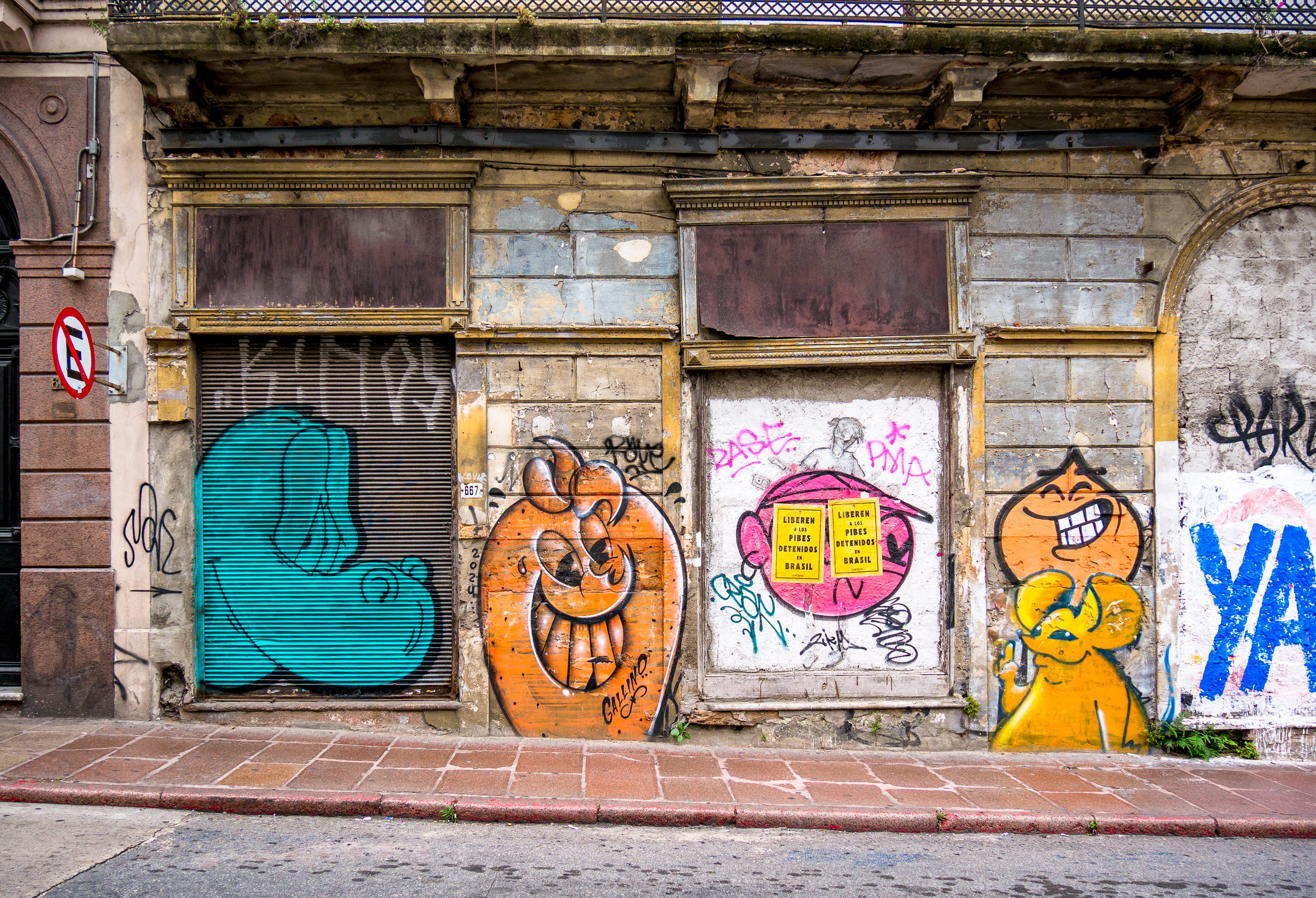
The original purpose of others has been lost, but as in this one, amid all the street art, you can still behold the wonderful architectural details that frame the now boarded up windows and doors.
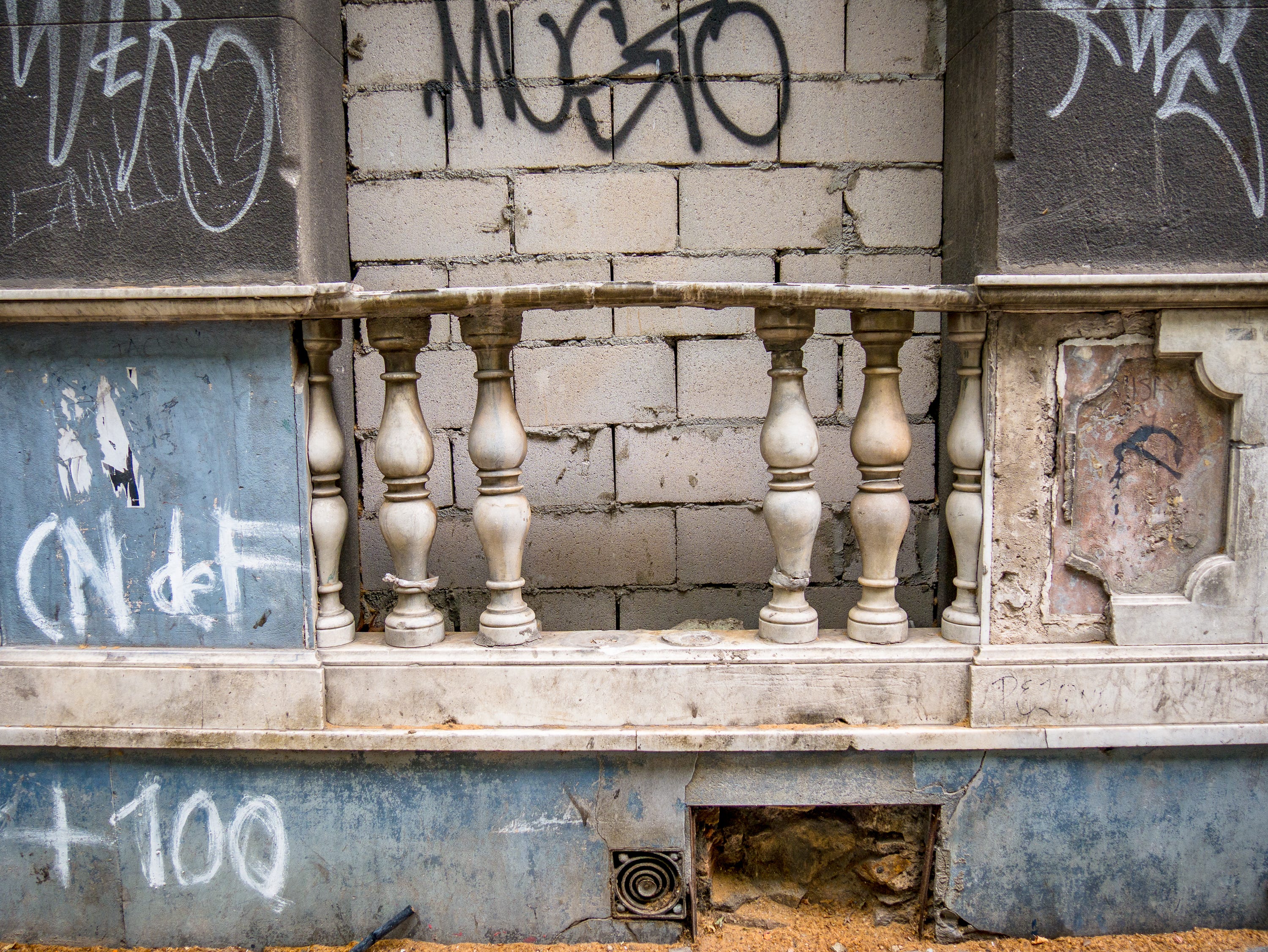
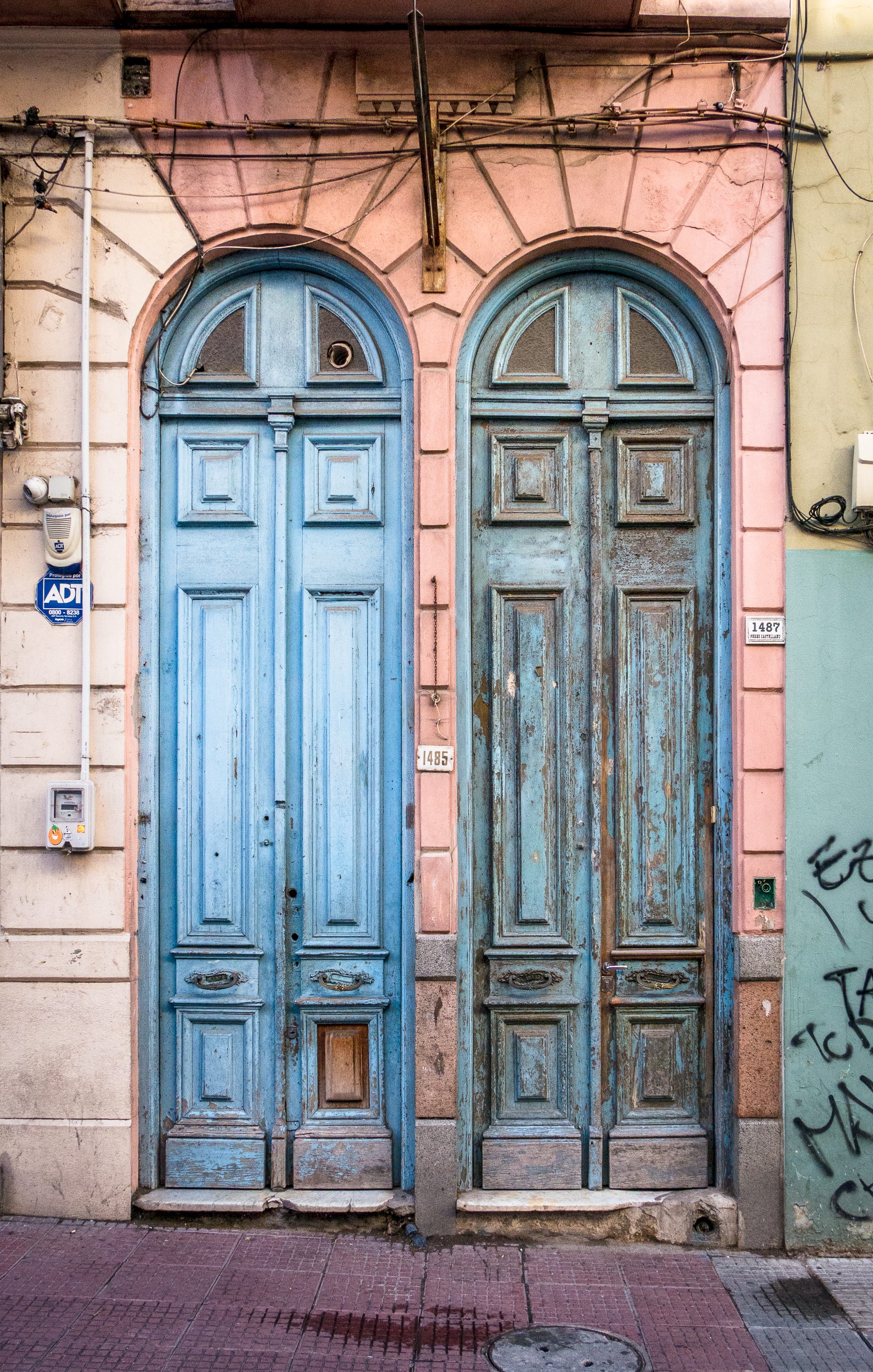
Even the details of these buildings retain elements of beauty.
Bright, shiny, and new doesn’t always satisfy
Several years ago, I speculated on why ruins so fascinate many of us. But maybe it is less about the ruined state and more about the underlying forms and architecture. Still, I think it depends on the person.
Perhaps, like me, you’ll find an elegance in the lovely architectural bones of these buildings or the textures formed over years of plenty and decades of neglect.
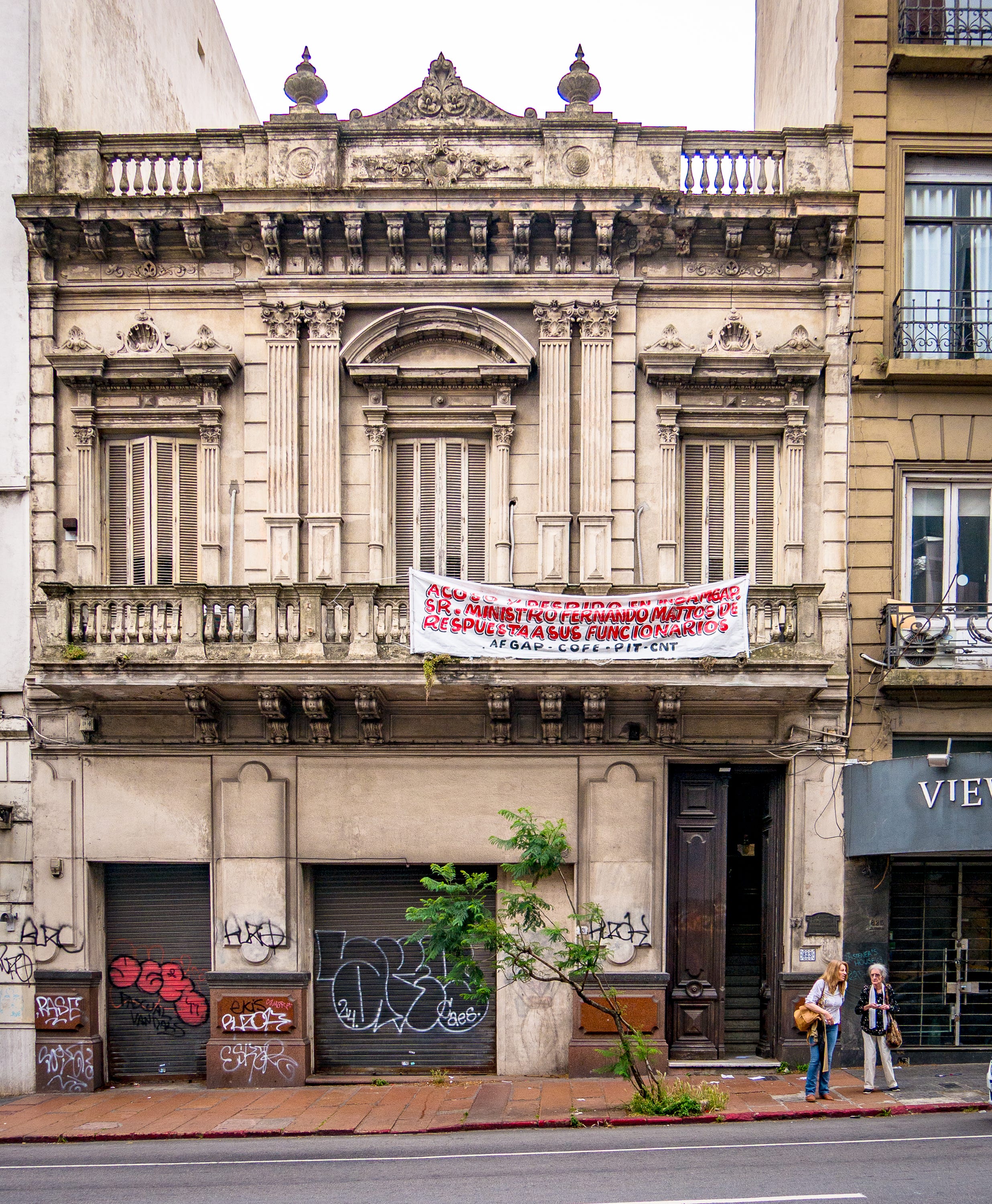
Perhaps, you’ll be put off by the extensive graffiti and often, accumulated rubbish.
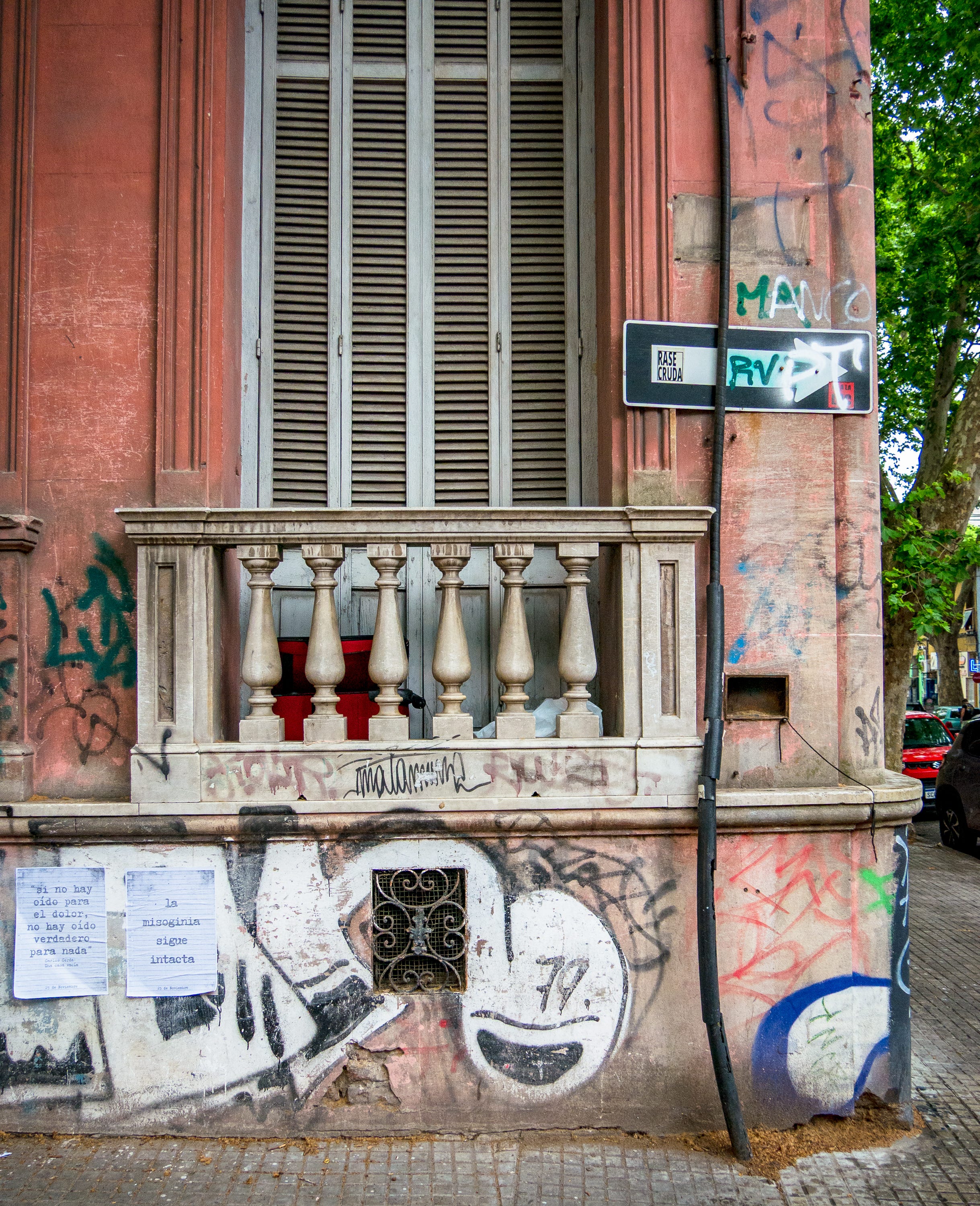
Maybe, you’ll be like an editor of a travel website I once wrote for who told all her photographers, “Don’t use images of architecture. Nobody wants to see a photo of a building.” Hmmm. I think it depends on the building. And maybe the photo.
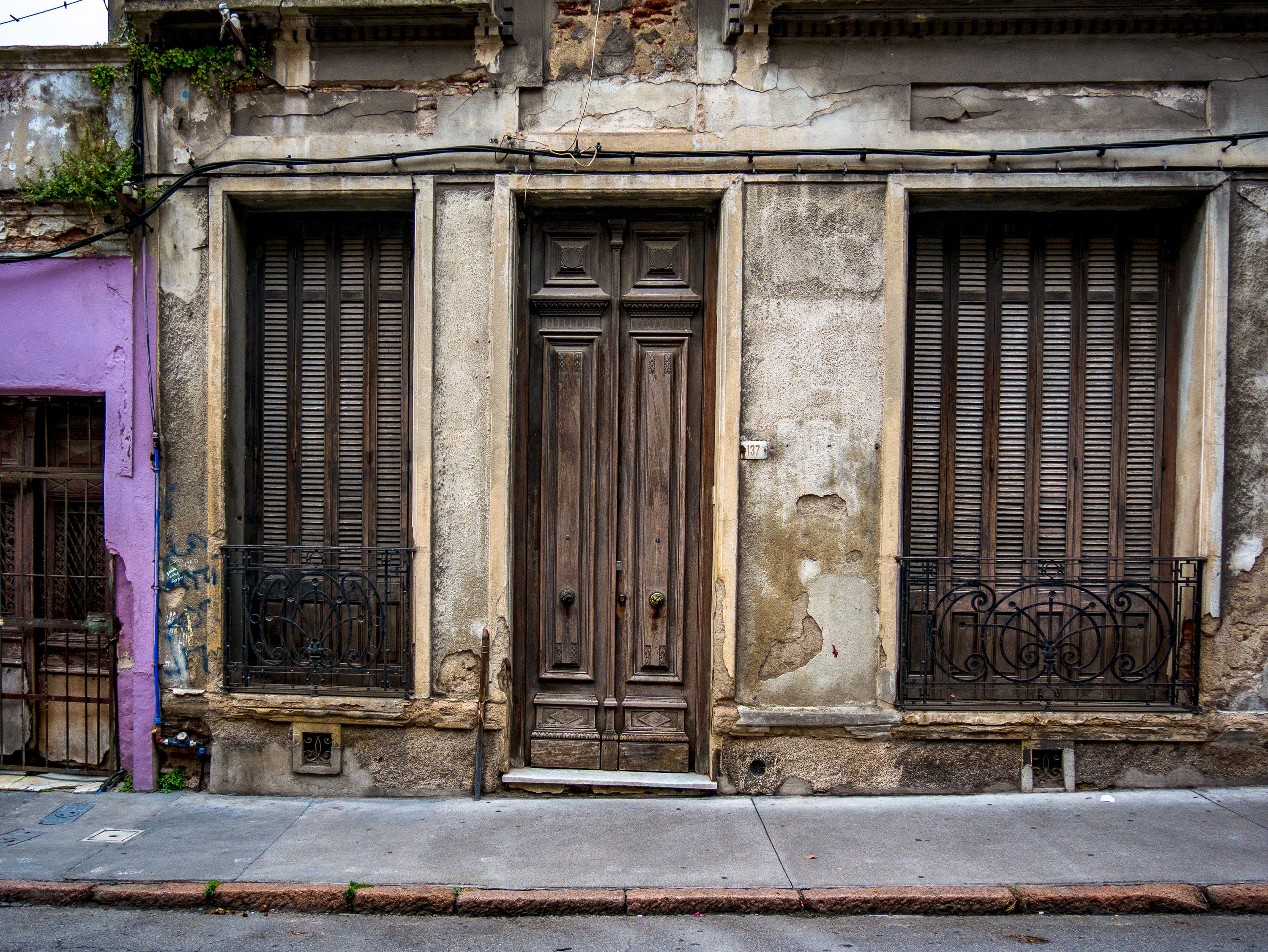
However you react to the architecture of Montevideo, do this. Pay attention. Not just to the kinds of buildings or photos you like. But why. What is it about the places that resonate with you that lights you up?
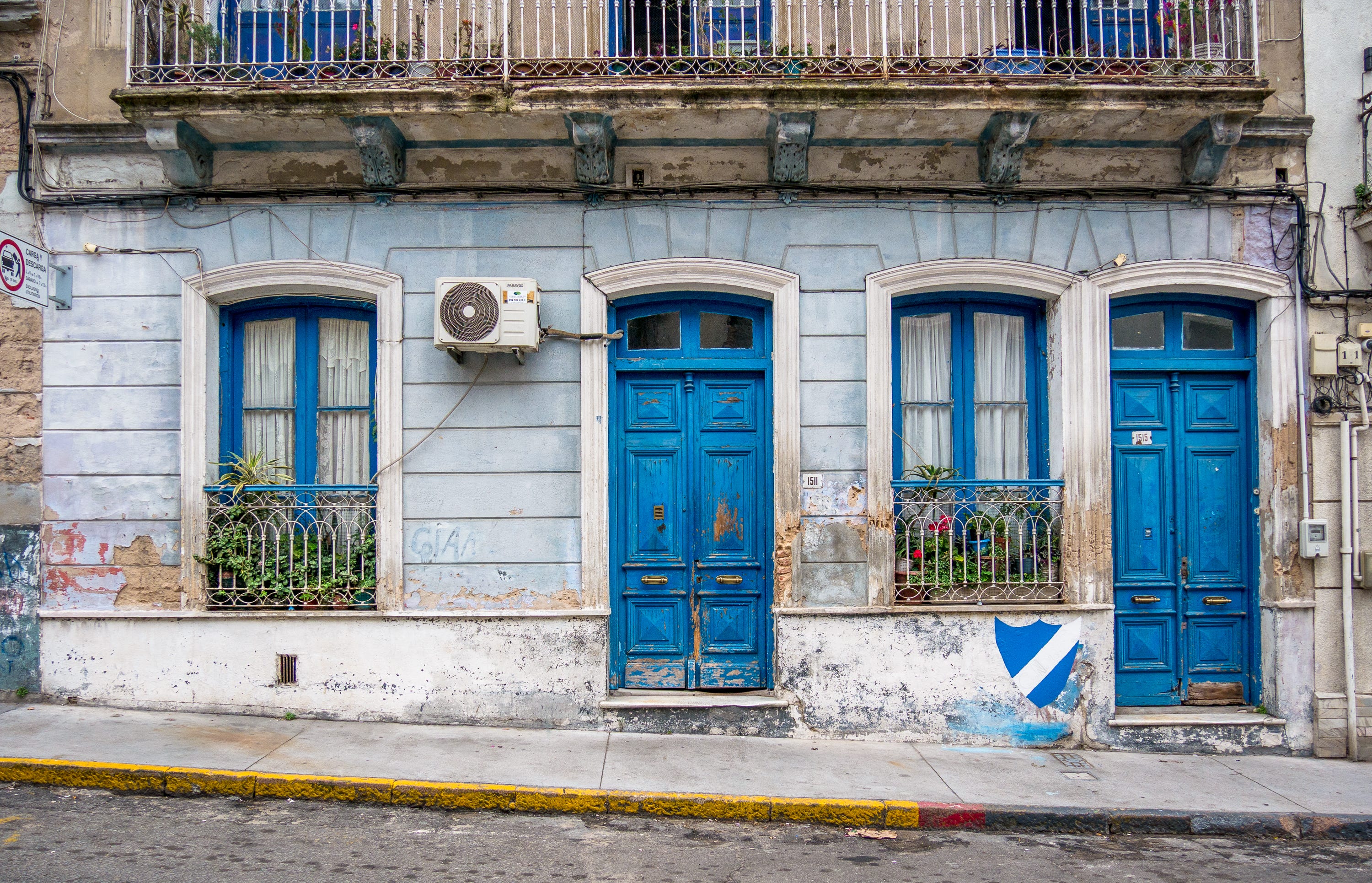
Pursue what appeals to YOU
Maybe, like me, you can’t completely explain it. But it doesn’t matter if you can articulate your interests to others, or even yourself. Just lean into them.
Seek out the types of places that appeal to you.
Pursue trips where you’ll find such places.
And most of all, recognize just how much such places affect you. Both then, and for years to come.
You don’t have to know why. You just need to be willing to go where.


