
Often our best creative work happens not during the peaks, but during the valleys
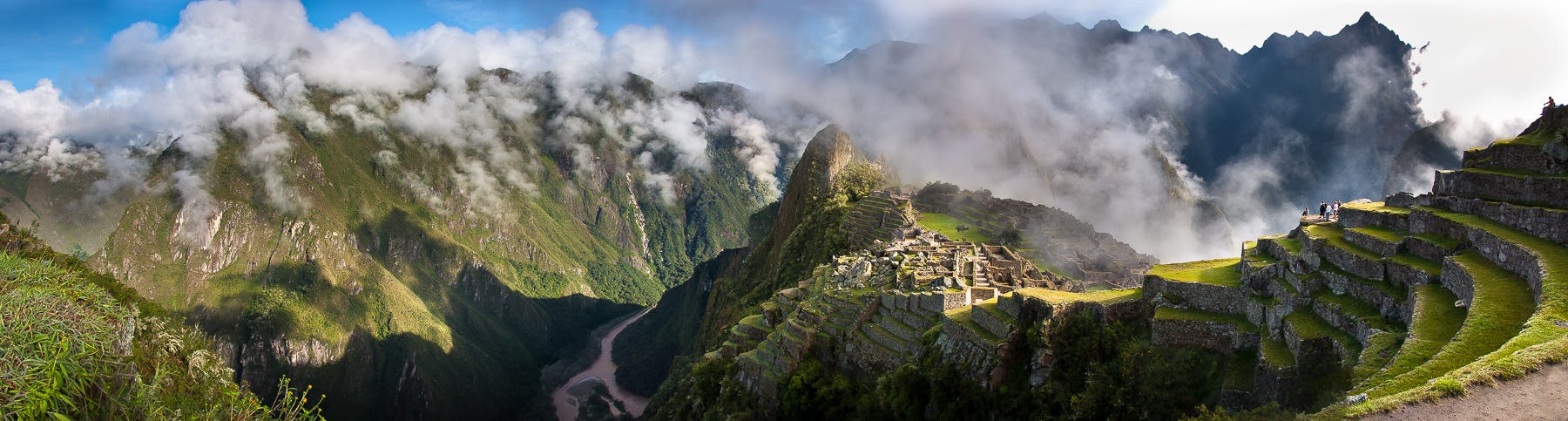
What follows is a piece I wrote at the request of Michelle Mays which first appeared on her popular blog, Authentic Hope.
An interesting question
I was speaking to a large gathering of business people about my latest book, The Creative Wild: Get Unstuck, Create More Adventurously. These were sharp, successful people who, during the Q&A session, asked insightful questions about the role of AI in creativity, how creativity in our personal lives affects our professional work, and others. And then one gentleman stood up and asked the most personal question yet:
“How do you create in the valley?”
He didn’t explain his situation other than to say that he could see how it is easy to be creative when you’re up and things are going well, but what happens when you’re not and life feels like it is falling apart. I didn’t have time to do my normal response of overthinking my answer. Instead, I told him this:
“That’s the best time to create.”
Here’s why.
Most of us do not live lives of deep passion and emotional depth. Instead, we skim over the surface of things, wandering through our days in a cloud of distraction. The ubiquitous presence of our phones ensures we’ll never have to spend a moment pondering anything deeper than the latest outrage du jour or clever meme on social media.
Most of us spend only a small percentage of our waking hours in intense joy or suffering. The bulk of our time lies in the mediocre middle. We’re not entirely satisfied, but neither are we uncomfortable enough to do anything about it. It doesn’t feel like autopilot because, frankly, it doesn’t really feel. We call it routine or existence or the life we’ve fallen into. Sure, we know it could be better, but then, we figure, it could also be a lot worse. So why rock the boat?
Until life decides to send you a storm and that boat isn’t just rocking. It’s rolling, twisting, spinning, and doing more crazy moves than a TikTok dance video. And you wonder not just how you could possibly create at a time like this. You’re wondering how to survive.
But for all the disruption to our norms, life in the valley has its blessings. And one of them is this: It strips away all that superficial stuff we thought was important but we now realized was window dressing.
As the philosopher Simone Weil once noted, “There are only two things that pierce the human heart. One is beauty. The other is affliction.” Both achieve the same effect. They get us to pay attention. And paying attention lies at the heart of creating.
Creativity has been defined as making unlikely connections. Seeing things others don’t. Bringing together seemingly opposing ideas into something unseen before. Most of us don’t create well because we don’t see well. And that’s where affliction comes in.
When we’re hurting, we have a clarity that our typical distractions don’t allow. We see to the root issues better. We discern what really matters. We speak and write and make art and connections from a place not just of pain, but of deep authenticity. We connect to our truest selves because we go looking beyond the artifice and facades we’ve put up.
In a world where AI can already write better than most of us, how will we create in a way that can compete? Not by leaning into our perfectionism. AI can out-perfect us in most regards. Instead, it is in the opposite direction, in the place of our imperfection. Our humanity. And yes, our pain.
I would not wish suffering on anyone. But when it inevitably comes our way (avoiding suffering is one of the most intense, common, and fruitless tasks of modern existence, at least in this country), we can wallow in the pain and loss. Or we can, as insensitive as this may sound, mine it.
We can find value in the stripping away of comfort to go places we normally won’t and to pull from the ideas, insights, and emotions that we would access in no other way. And from those come the works of creativity—whether in the arts, business, science, or any other part of your life—that resonate most with others because they have come from a place of truth.
A friend of mine, Jack, frequently cites a quote, the source of which neither of us can recall, to the effect of this:
“What goes deepest to the heart goes widest to the world.”
What touches you the most and seems so incredibly personal will likely be the one thing that others respond to most. And where do you connect to that deepest emotion? Not while scrolling your phone, watching Netflix, or even chatting at the office.
It happens in the valley.
So next time life looks bleak, look again. It’s not just that beauty and affliction are the two things that pierce the human heart. It may also be that in the affliction is where we have the best opportunity to see the deeper beauty and bring it forth into the world.
You can find more about Michelle Mays and Authentic Hope at https://michellemays.com/.
This post also appeared on my Substack at https://stevebrock.substack.com/p/creating-in-the-valley


